IBM Prospecting Hub
Designing for advisors who'd rather be on the golf course
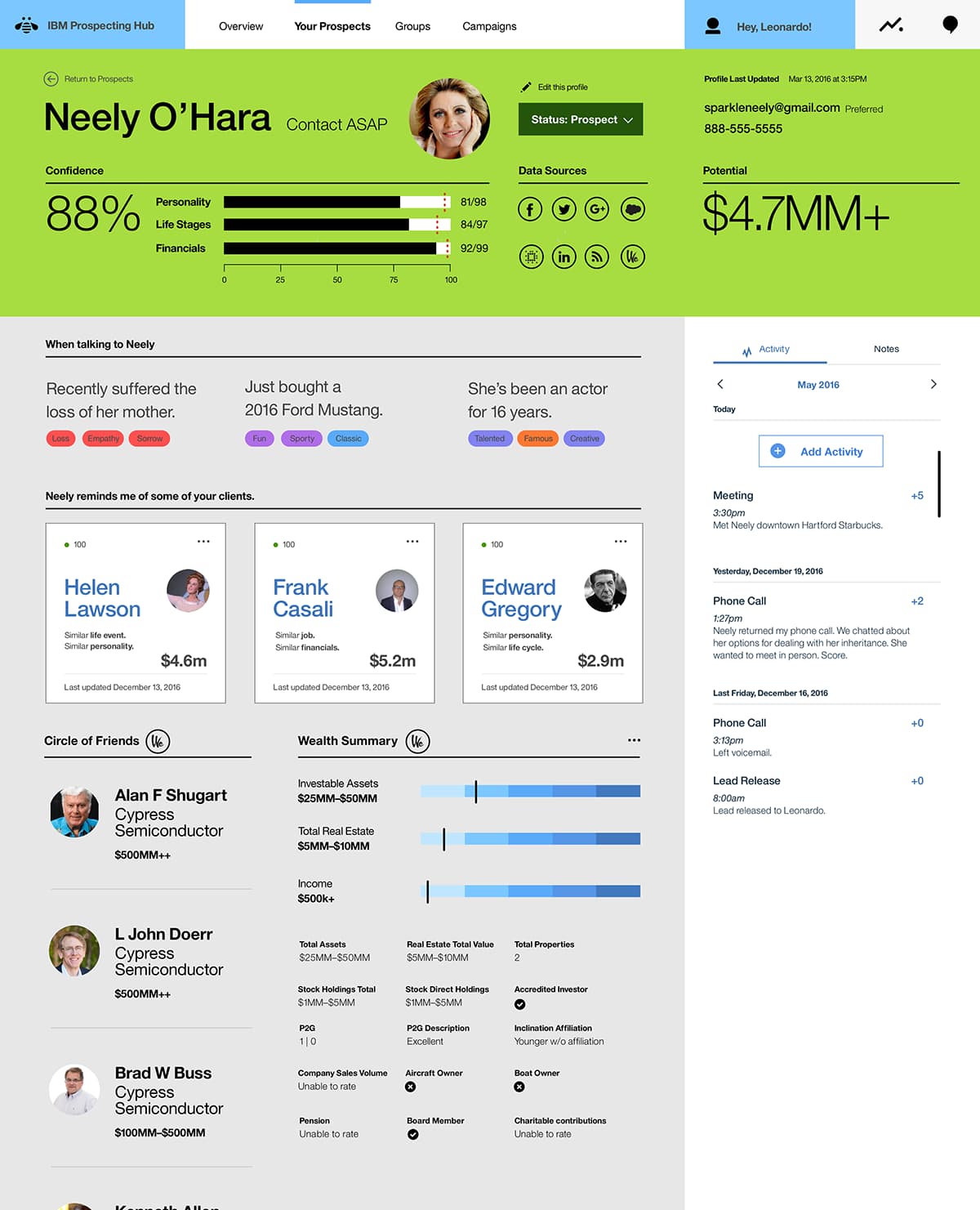
Prospecting Hub was IBM's lead-generation tool for financial advisors. The ask was clear: design a workflow that gets advisors to qualify and contact more leads.
We ran a one-day workshop with IBM and the advisors they were building for. By lunchtime the brief was wrong.
Financial advisors don't want to qualify leads. They will do what it takes to run the practice, but no advisor wants to open a tool called "prospecting" on a Friday afternoon. When we said the word, they checked out.
We shifted from "help advisors do the work" to "do the work for them." That changed the product strategy and visual direction.
What we learned
They're not motivated by prospecting.
We had active conversations with eight advisors, plus a handful of listening sessions with the IBM Offering Management team. The pattern was clean. Advisors are motivated by the relationship after the lead, not the work to find the lead. They want qualified prospects placed in front of them, not a tool that demands their afternoons.
Personalization moved the numbers. Personality matching between advisor and prospect raised conversation rates by roughly a third in IBM's tests.
Friction at first contact kills good leads, so we put email and social presence on every page: no "where do I find your address" moments.
Social signal beats demographic data for prospecting. LinkedIn behavior was a stronger predictor of an opening than firmographic match.
The product had to do the work the advisor wouldn't.
What shipped
It does the work for them.
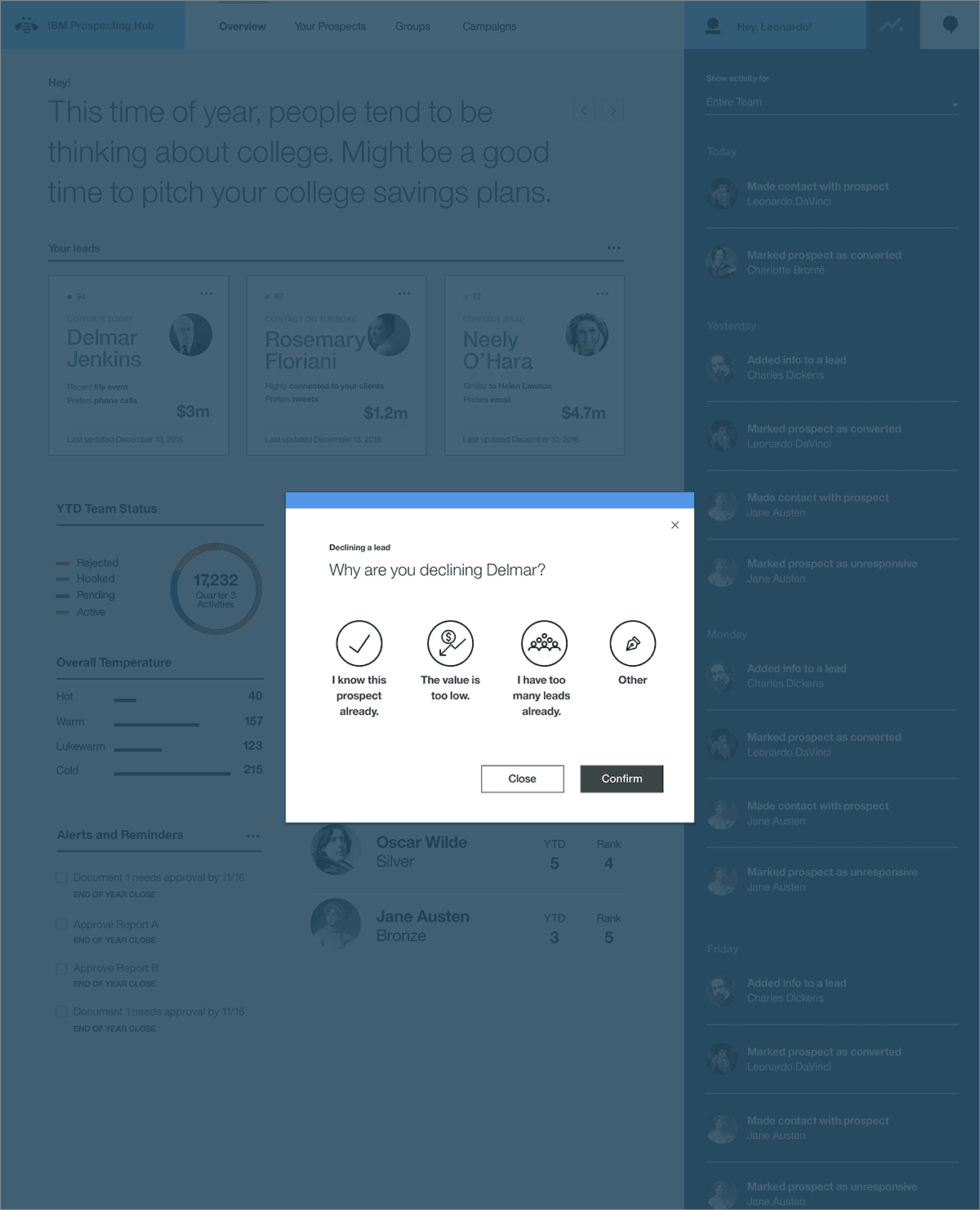
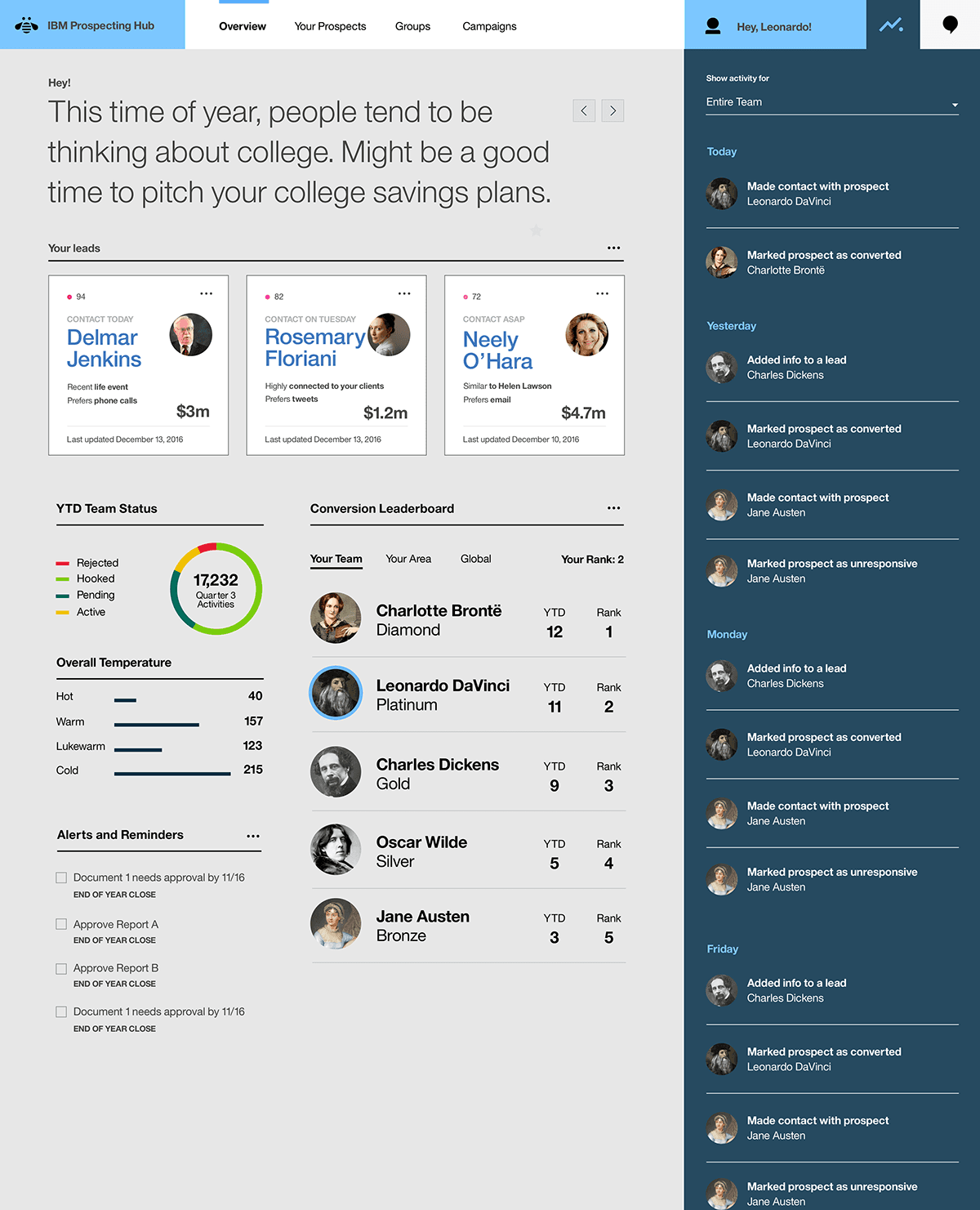
We built a Hub that surfaces qualified leads, ranked by personality and social fit, with the advisor's preferred outreach copy pre-drafted.
Default views show the next ten conversations to have, instead of a thousand records to clean.
We reframed the offering's value prop, away from "more leads" and toward "the right ten."
We also left behind a workshop deck the IBM team kept using to align downstream conversations.
The right ten conversations beat the next thousand records.
Outcome
Sometimes the design is to listen long enough to realize the feature you were hired to design isn't the feature anyone wants. Then go back, and design the one they do. We did the avoidable part for them and handed back the part they came for: the conversation, the handshake, the afternoon they'd rather spend on the course.
Takeaways
- IBM
- High Tech
- Telcos
- Finance & Insurance
- Product Strategy
- Concept Co-Generation
- Experience Design
- Strategy
- Visual Storytelling
- Workshop Facilitation
- IBM Offering Management
- Design and Sales teams
Up next