Ontada
Building a research program that survives the engagement
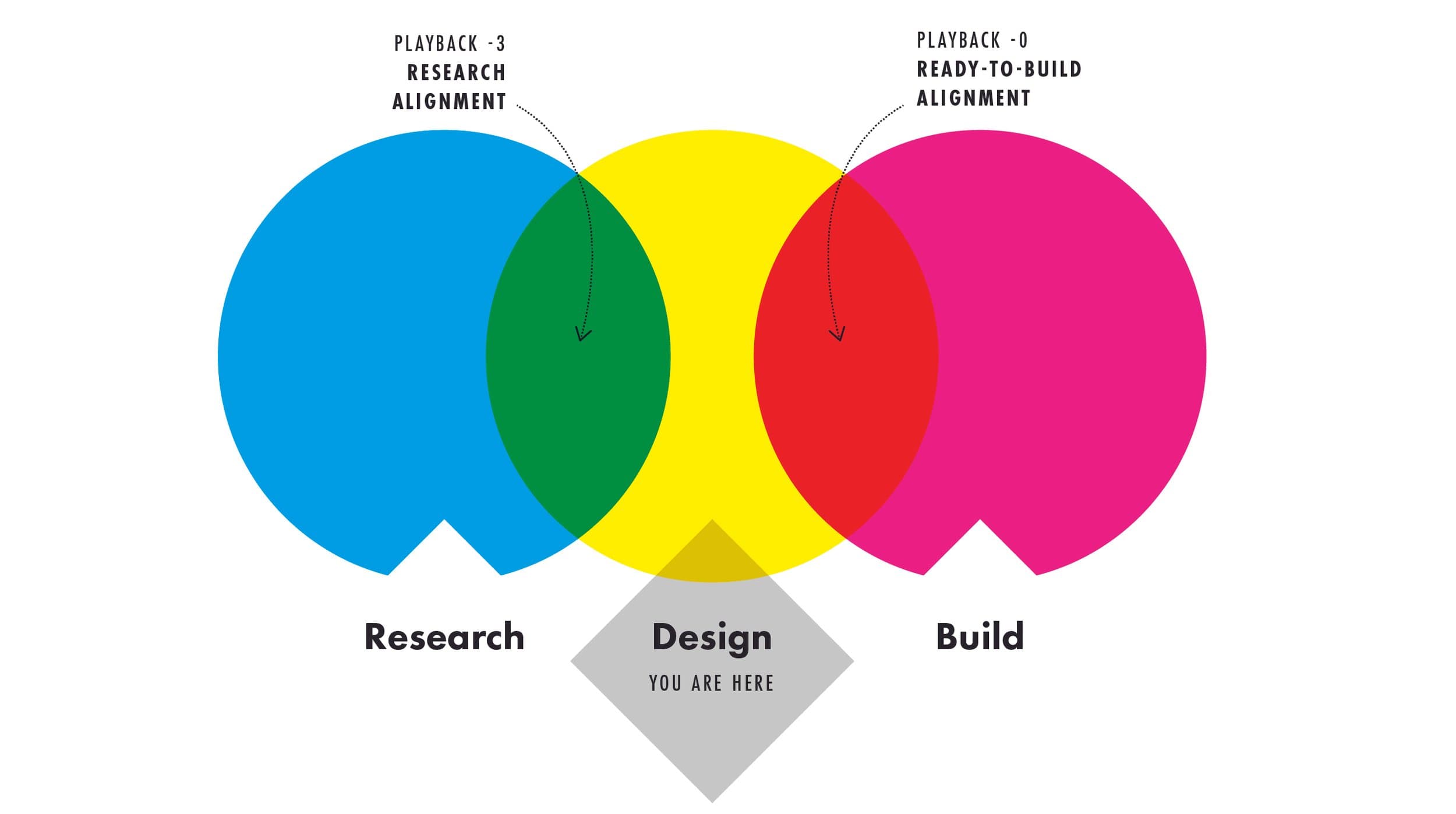
Ontada had a product team in motion but no research practice. Decisions were happening fast, with evidence trailing behind, and there was no time to build a research workflow during an active launch.
I built one alongside them: a framework for ongoing user research that lived inside their tools and matched how they actually worked. It's something they'd actually keep using, rather than a deck that gets filed away.
The research had to do its real job during the launch, not as homework.
By the end, Ontada owned the research program. They could ship without us in the room.
How it ran
Process, taught in public.
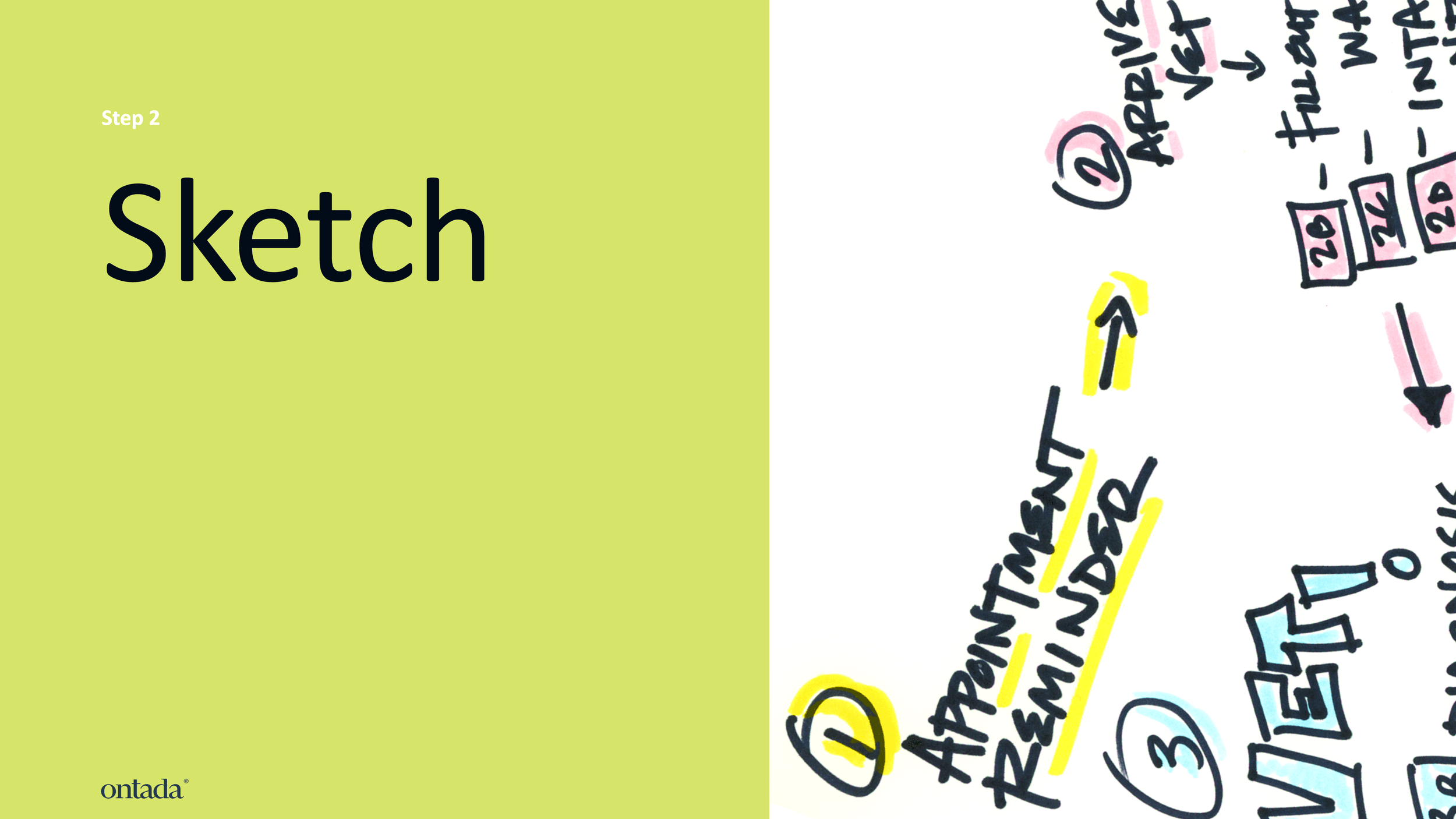
Most of the work was in the room: sketching demos, live design critiques, and playbacks where I'd narrate what I was doing as I did it, so anyone watching could pick up the pattern. The artifacts came after: the wireframing kit, the templates, the shared Figma library. The artifacts were proof of a habit. The habit was the point.
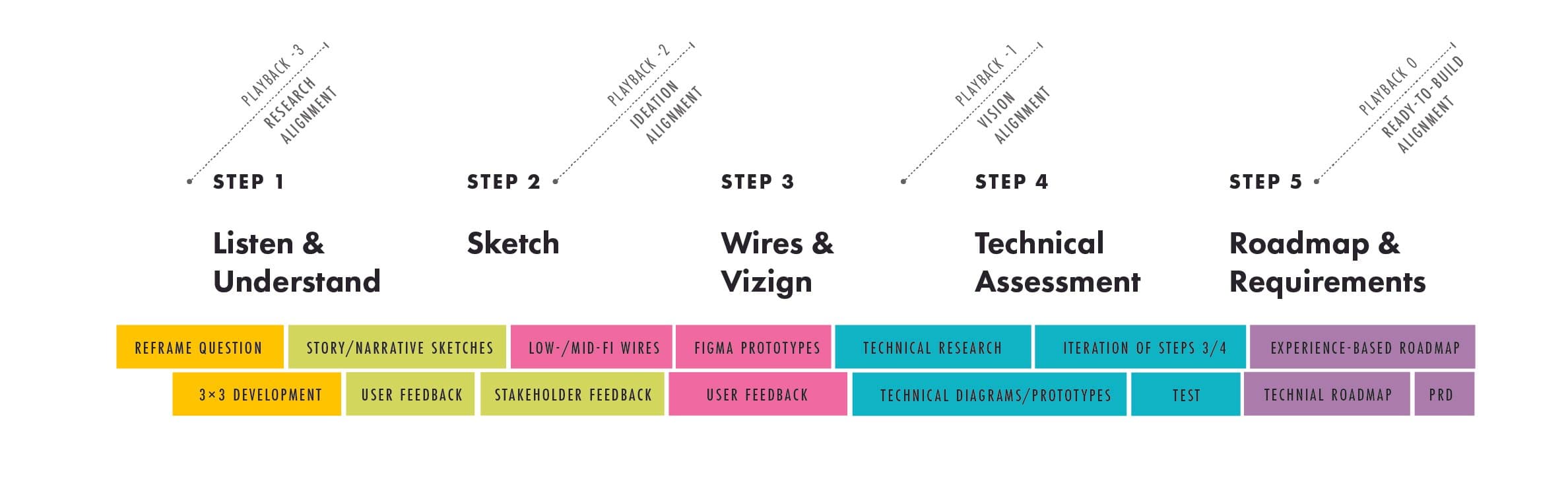
I ran teaching sessions on UX sketching, design process, and playback technique.
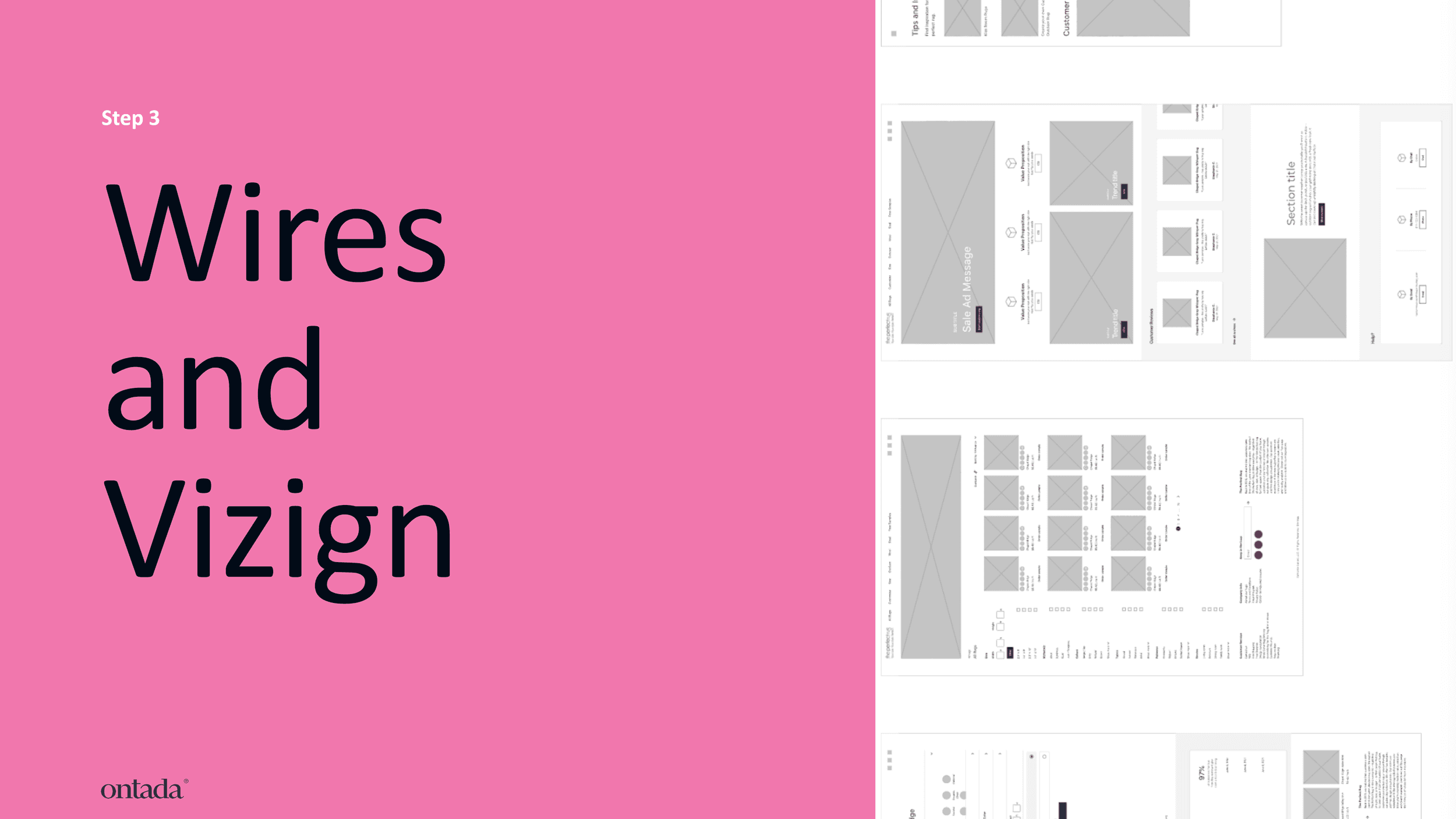
I built a wireframing kit in their Figma, using their conventions.
I wrote documentation that matched their voice instead of ours.
I built frameworks for handing design to engineering without losing intent.
What stuck
A practice that stuck.
The practice continued after the engagement closed.
Outcome
The research program now feeds real customer input into product decisions on a regular basis.
The Ontada design team uses the wireframing kit as the default starting point for new flows.
Critiques run on a calendar now. Show-and-tells happen weekly.
The team handed back the playbook with their own additions, which is what success looks like.
The deliverable nobody asks for is the one that lasts. Anyone can leave a deck behind. The harder thing is leaving behind a habit.
Takeaways
- Ontada
- Healthcare
- Life Sciences
- Design Leadership
- Research Strategy
- Process Design
- UX Research
- Design Process
- Team Enablement
- Ontada Product, Engineering, and Design teams