Watson Talent Admin
The democratization of AI setup
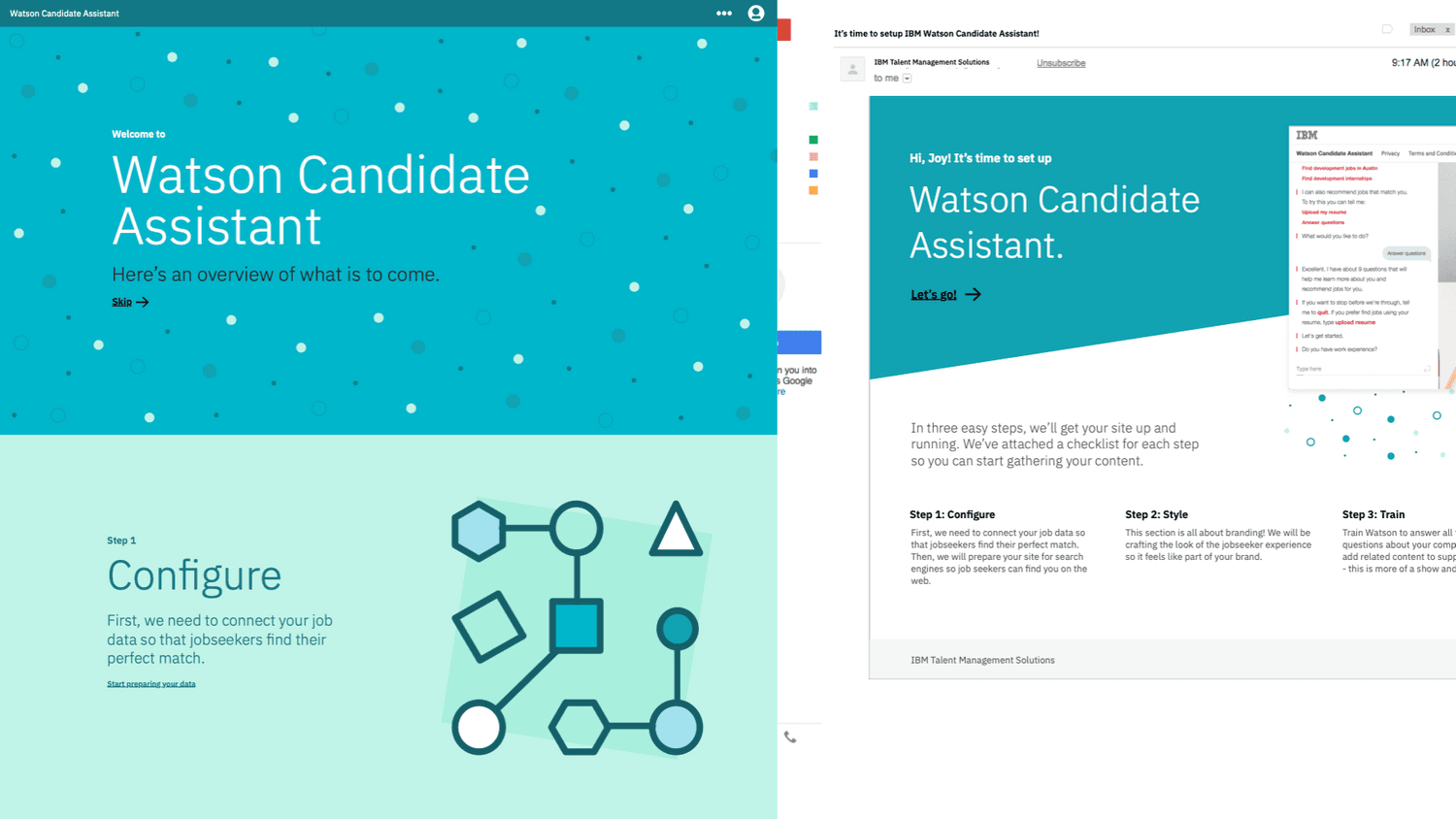
Watson Candidate Assistant was a good product with a real problem. Customers liked the AI but couldn't reach it without a several-week setup project run by IBM engineers at hourly rates, scheduled months out.
Sales closed a deal then said "now we wait." Support inherited half-configured tenants. Adoption capped at the implementation team's speed.
Setup had to move from services into the product. HR ops managers and recruiters had to do it themselves.
We built an admin tool that felt like the AI it configured. It took a customer from blank slate to working configuration in one afternoon.
What we walked into
Setup that took several weeks.
The configuration lived in code. Every customer got a custom build: questions, evaluation logic, integrations with their ATS, permissions, branding. Each change went through a developer ticket. Each ticket waited for the same six engineers.
The HR teams who actually owned hiring had no way in. They wanted to add a question to the screening flow on a Tuesday and have it live for Wednesday's candidate pool. Instead they sent an email, waited a sprint, and watched the question sit there while the week moved on.
Implementation services were the bottleneck. They were also half the cost of the contract.
A simple change request waited four to eight weeks. Customers learned to batch their asks.
Sales had to talk around the deployment timeline. Most prospects asked first, then quietly walked away.
Adoption stalled below where the AI's accuracy could carry it.
How we built it
A tool that explains itself.
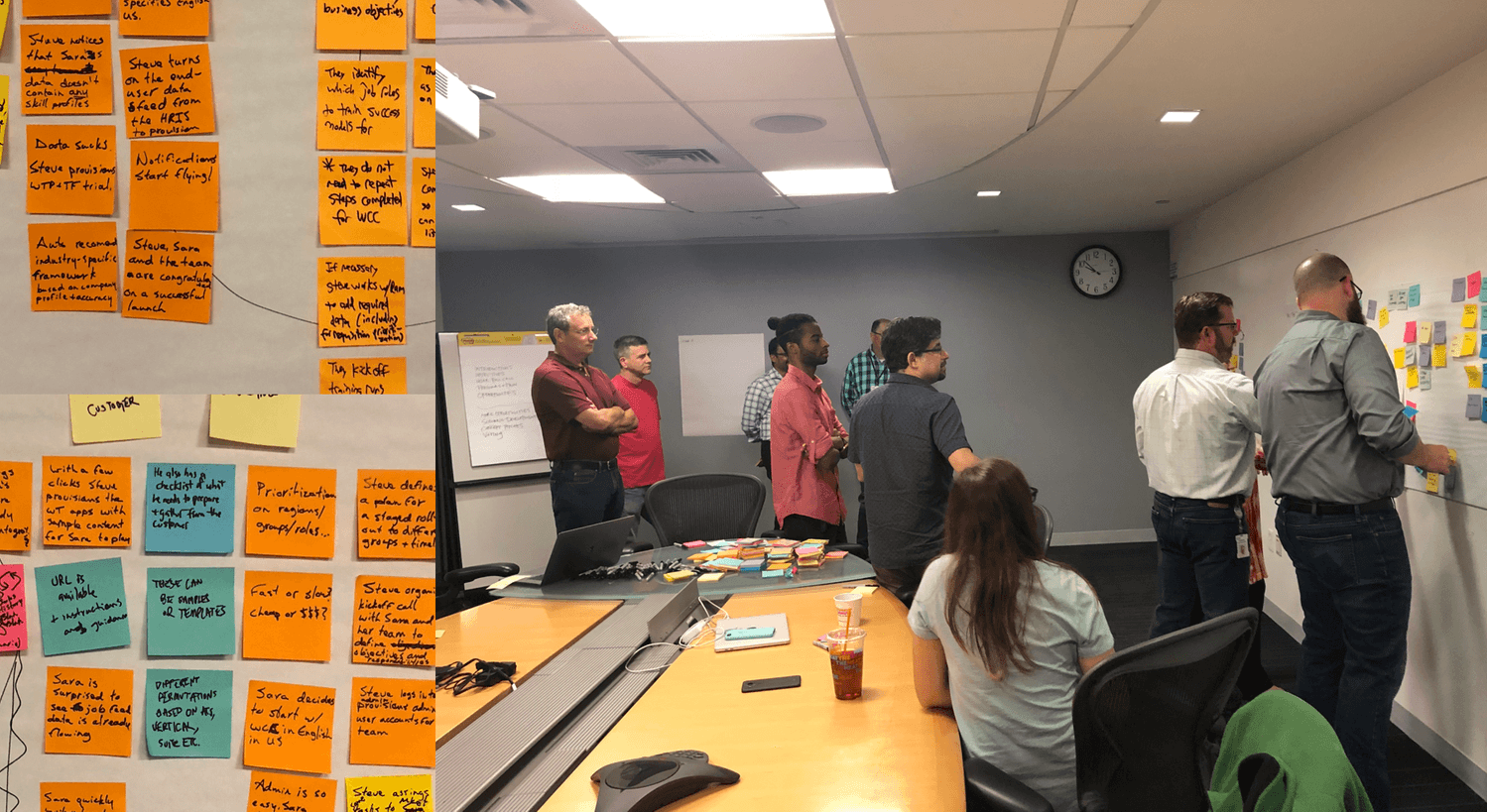
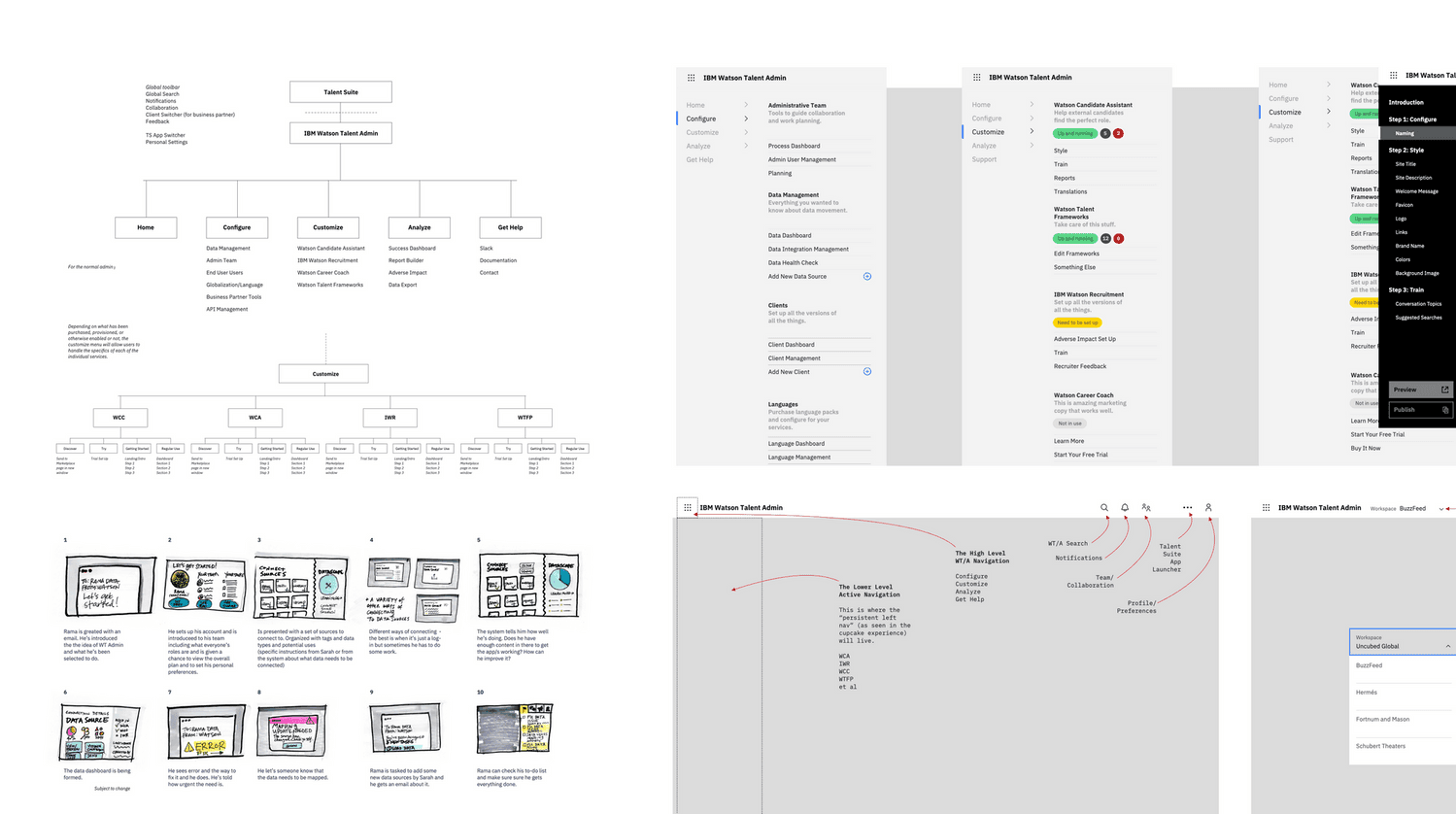
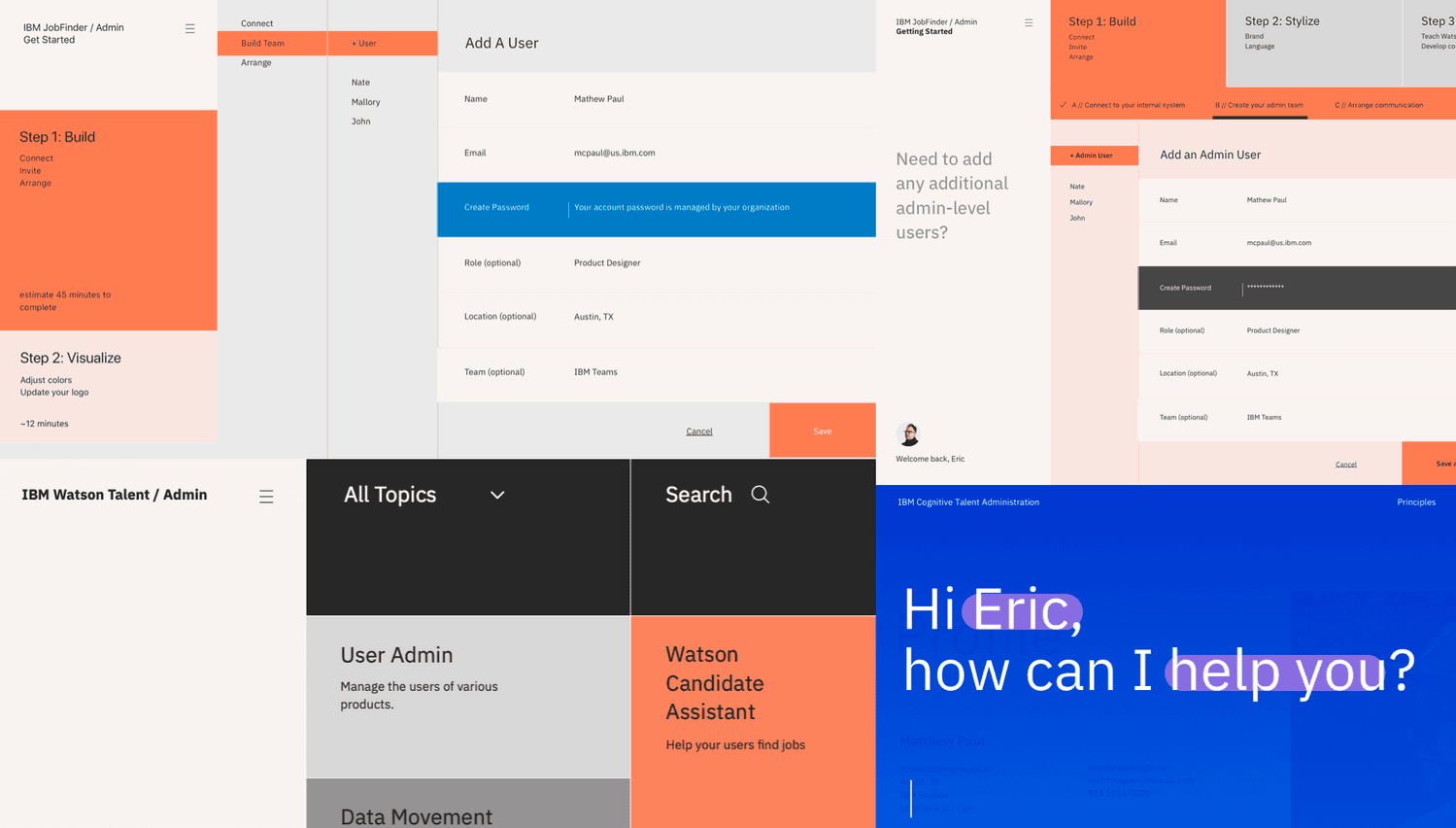
We ran six weeks of design sprints with real HR teams in every session, no surrogates, no internal stand-ins. We used Carbon as the underlying system, with our own pattern library on top for the parts Carbon didn't cover. Nothing shipped until a non-technical user could complete the flow without help.
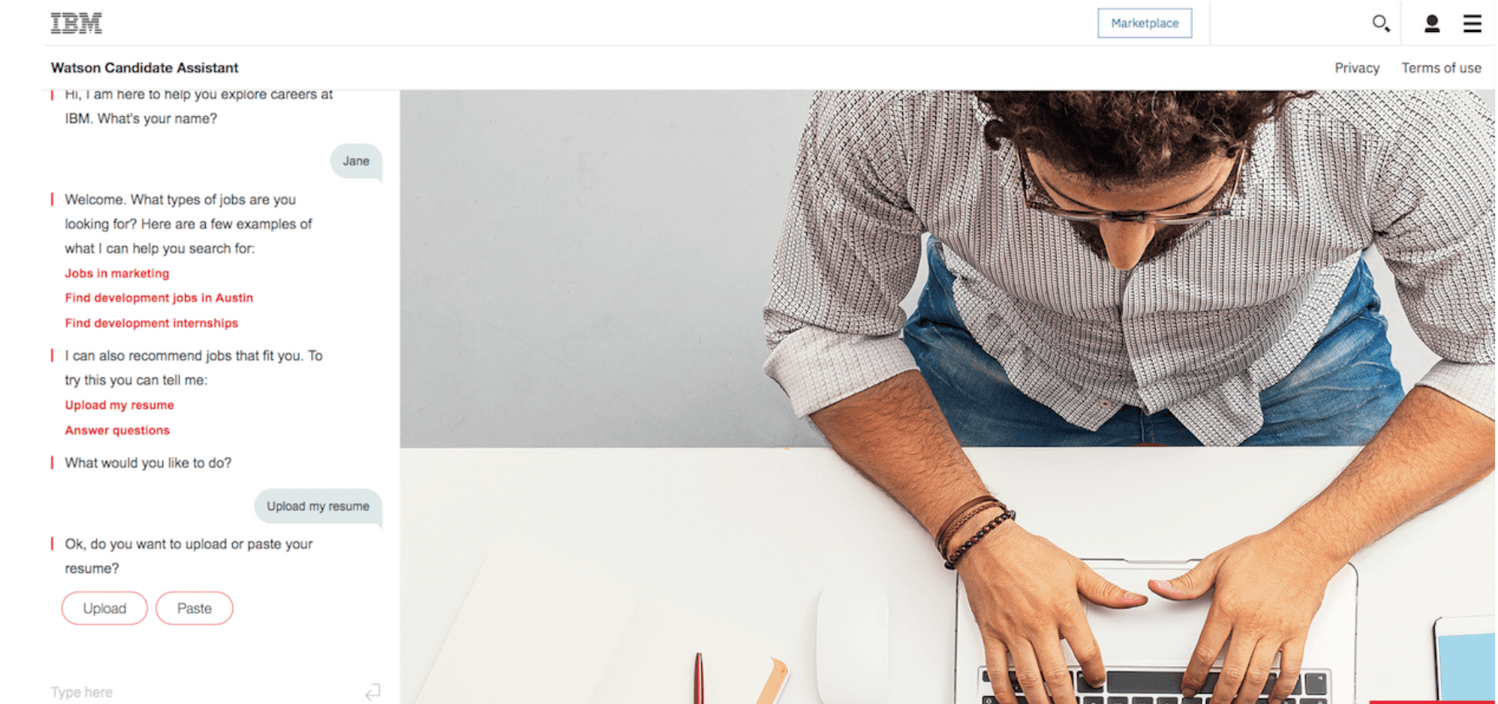
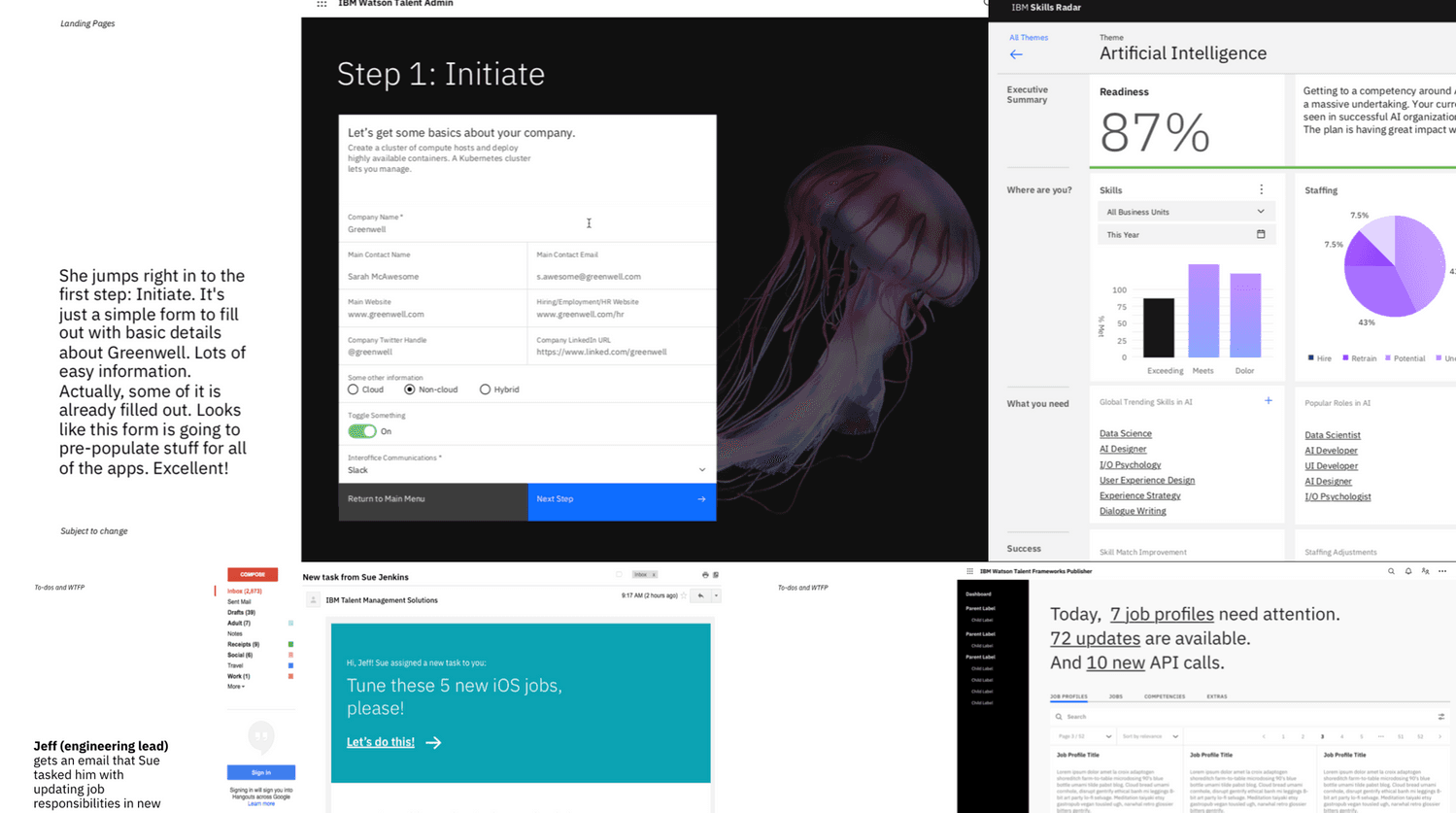
We put inline help everywhere, in plain English. If a setting affected candidate experience, we said so. If it affected compliance, we said so. The tool taught the model as the user worked, so by the time setup was done they understood the AI well enough to defend it to their team.
Outcome
From weeks to days.
Setup time dropped 90%. The implementation queue cleared.
Customer satisfaction in the post-launch survey went up across every category, with the largest jump in "ease of getting started."
The implementation team retrained on advisory work, where they were always more useful than they were on a config screen.
Watson Candidate Assistant moved from "talk to sales for setup" to "see it running this week." Pipeline conversion followed.
The product had been hiding behind the services team. Once setup was a UI instead of a ticket, the product could compete on its own merits.
Takeaways
- IBM
- Technology
- Talent Management
- AI
- SaaS
- Creative Direction
- Design Production
- Content Strategy
- Project Management
- Process Consultation
- UX/UI Design
- Product Strategy
- Facilitation
- Vision
- Mehjabin Kapasi (Offering Manager)
Up next