The Collective
Launching the studio I built: the brand, the manifesto, the materials
The Collective is a studio of doers and makers from different backgrounds: founders, in-house teams, non-profits, Fortune 500 groups. We needed a brand that worked for all of them.
The launch system covers the wordmark, the avatar, the manifesto, the buttons, the deck templates, the print pieces, and the voice.
The visual idea is contrast: lightness and joy set against stern typography, hand-lettering laid over a strict grid, mustard against deep ink black. Both sides depend on each other.
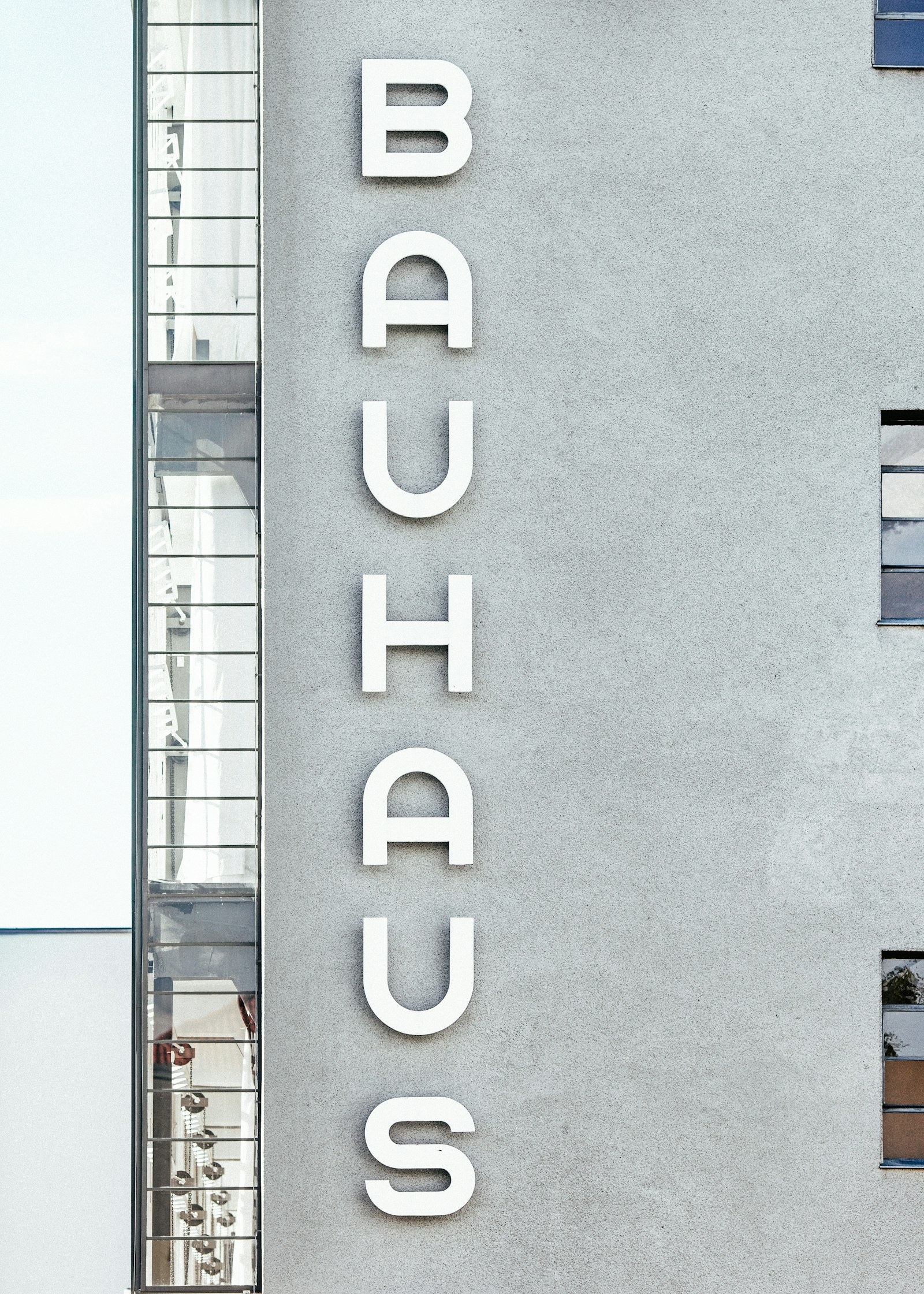
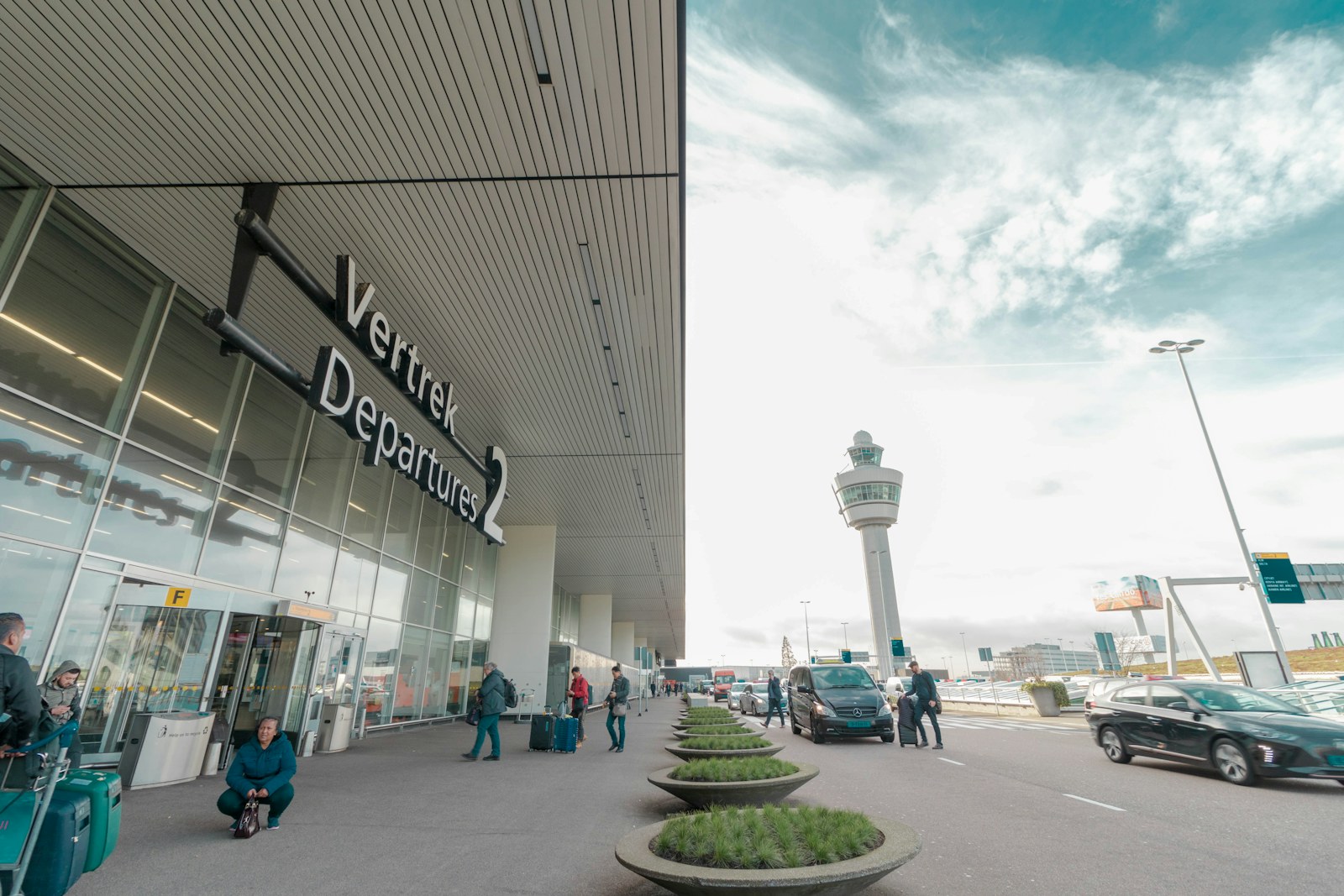
We pulled from three influences: Bauhaus for the way color and form can do the work alone, neo-modernism for warmth inside structure, and the Schiphol Airport wayfinding system in Amsterdam for how big type sets calm in a busy room.
Where it came from
Three reference points.
We pulled from a long list and edited it down to three. Each one contributed a specific thing to the system. Bauhaus gave us permission to let color and form do the work. Neo-modernism kept warmth in the grid. The wayfinding tradition at Schiphol airport in Amsterdam showed us how a single line of big type can set the tone for a whole room. None of these are quoted directly. All of them are present.
Exploration
Three names. One answer.
The studio went by three names before it was The Collective. Each name carried its own visual direction, its own room temperature, its own way of answering the door. Looking at them in order is the clearest way to explain why we landed where we did.
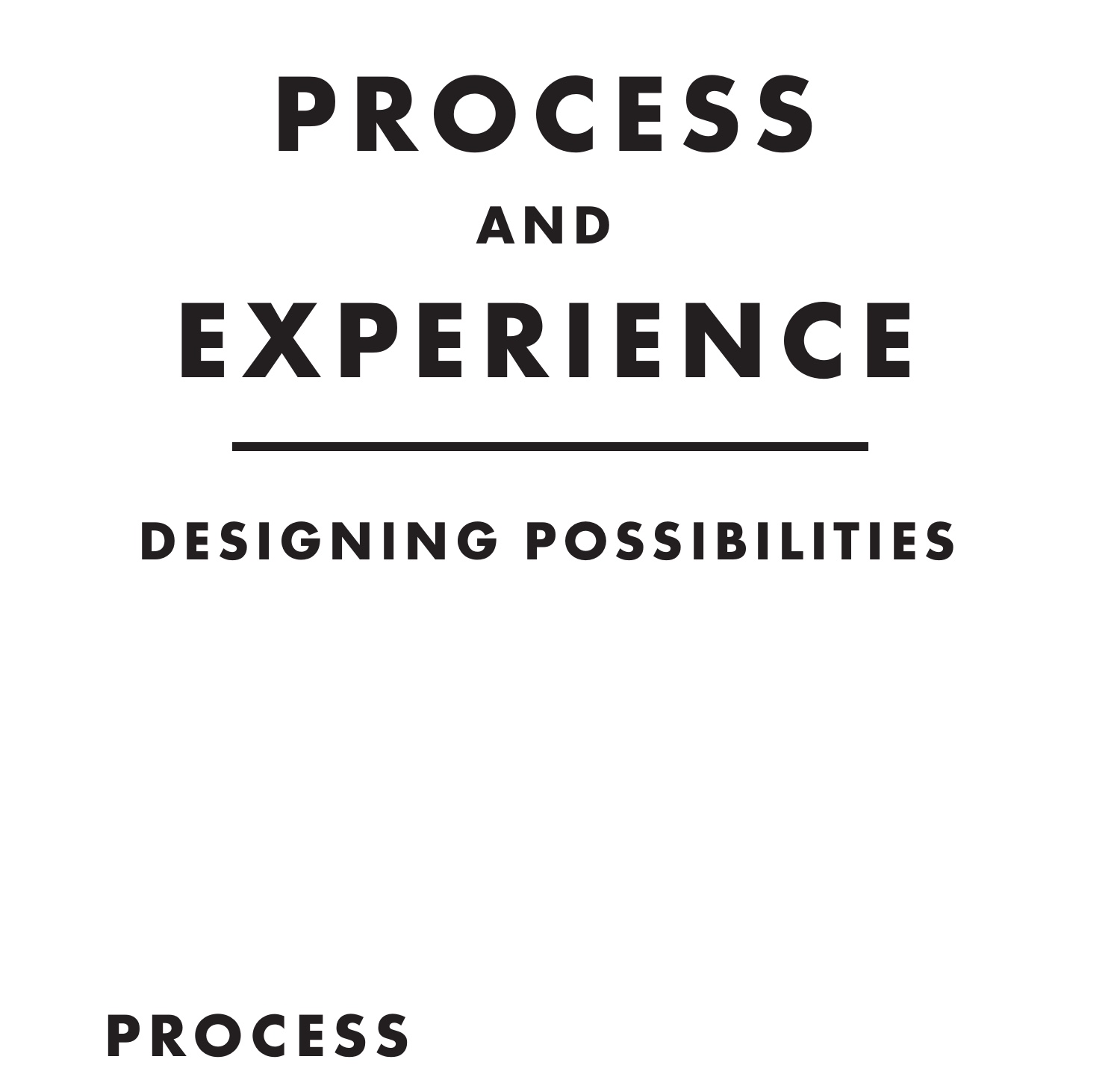
Name 01 · Process and Experience
It read like a course catalogue, the right energy for a conference but the wrong one for a studio.
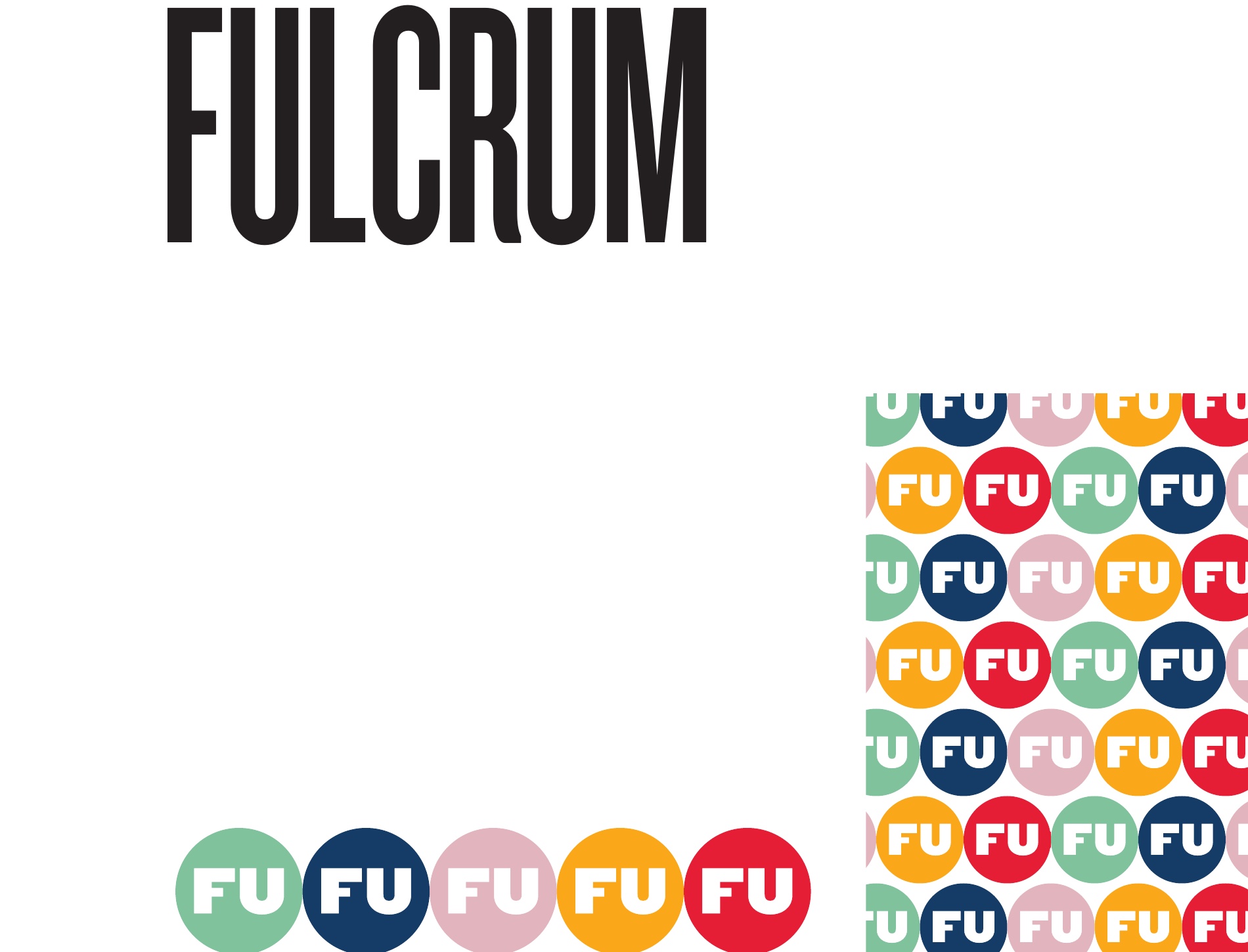
Name 02 · Fulcrum
We made five colors of FU buttons before anyone read the second syllable. The mark out-talked the work.

Name 03 · The Collective · Shipped
A small "THE" sits over a bigger "COLLECTIVE," reading as one phrase. It holds at a contract scale and at a button scale, keeping the same room temperature for a Fortune 500 procurement desk and an arts non-profit on a shoestring.
Why this one
- It's plural in the noun, because the studio is not a person.
- It owns one word, which makes it easy to say, write, and remember.
- It reads as inclusive, covering clients, collaborators, and work alike.
- It survives the avatar test: THE / CO holds at 64px.
The mark
The Collective.
The wordmark sets a small "THE" above a bigger "COLLECTIVE." Both lines carry the same weight, so the lockup reads as one phrase. The letters sit tight, with the counters opened just enough to breathe at print scale. The mustard square avatar ("TH / CO") is what the wordmark becomes when it has to live inside a 64-pixel circle.


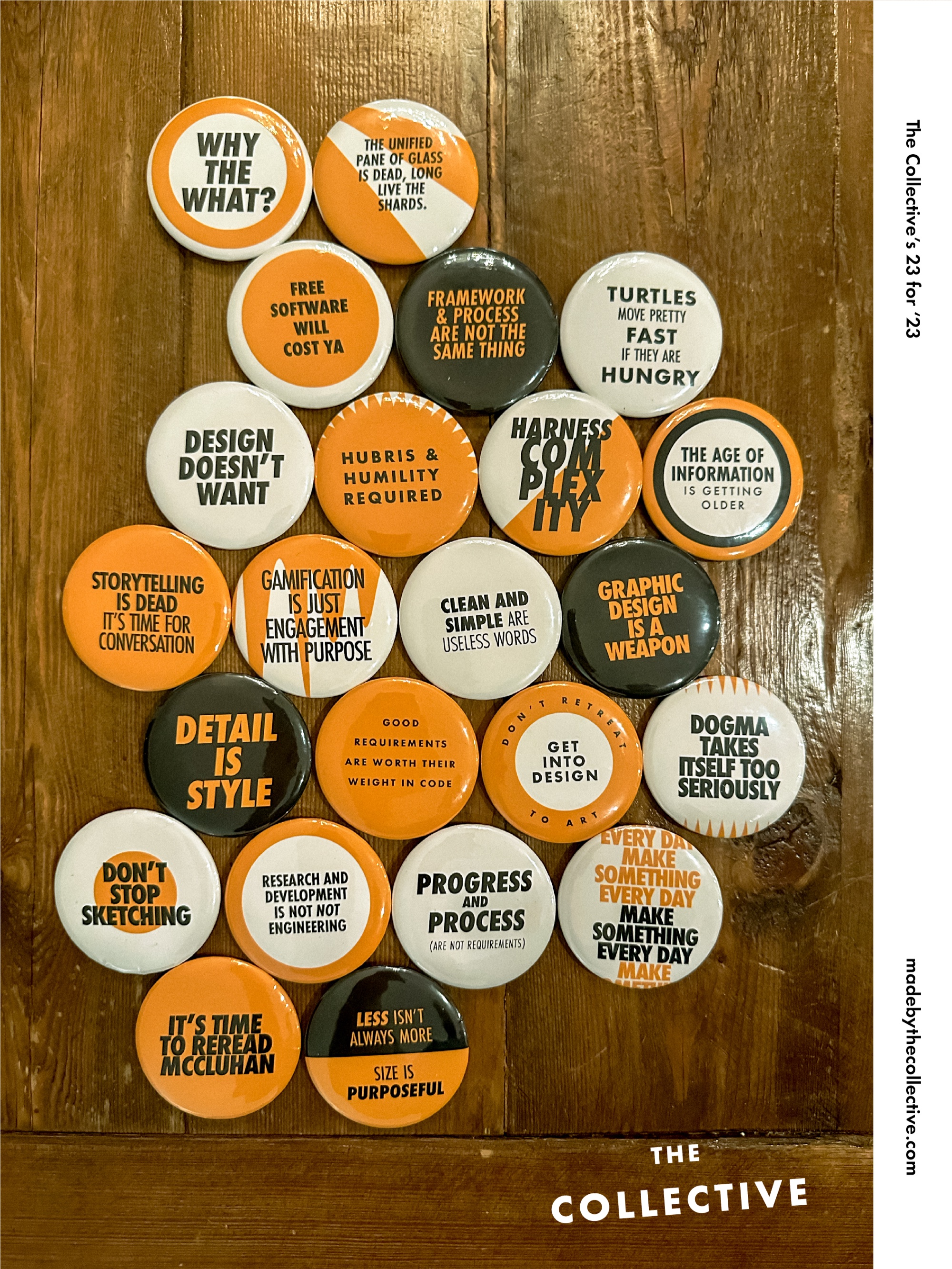
The Collective's 23
Twenty-three rules. Hand-lettered. For the year ahead.
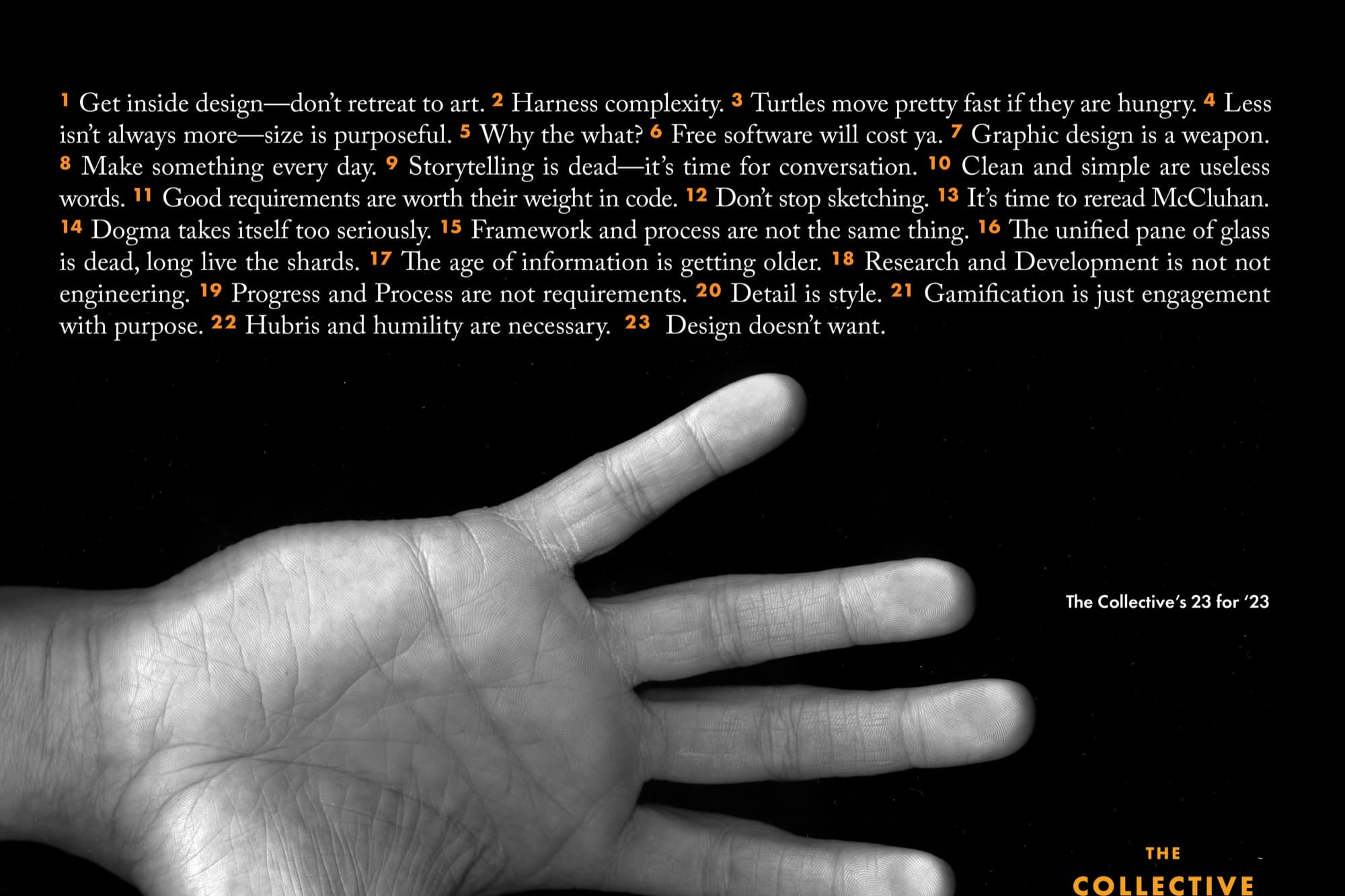
Every January the studio writes a manifesto: twenty-three short statements about how we work, hand-lettered onto a single page. Get inside design; don't retreat to art. Detail is style. Less isn't always more; size is purposeful. Storytelling is dead. It's time for conversation. The page becomes a poster, a mailer, a sticker sheet, and twenty-three pinback buttons we hand out at conferences.
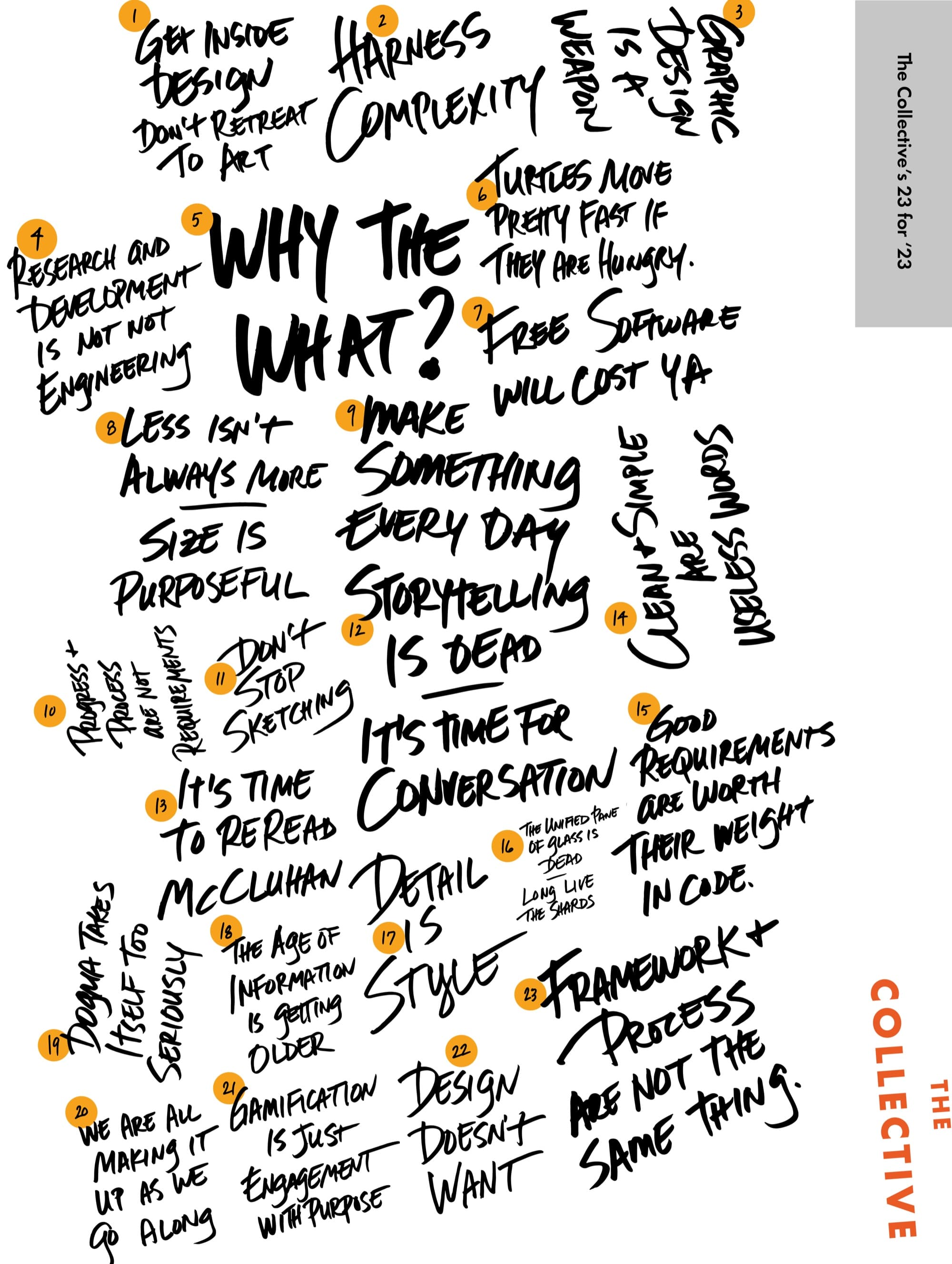
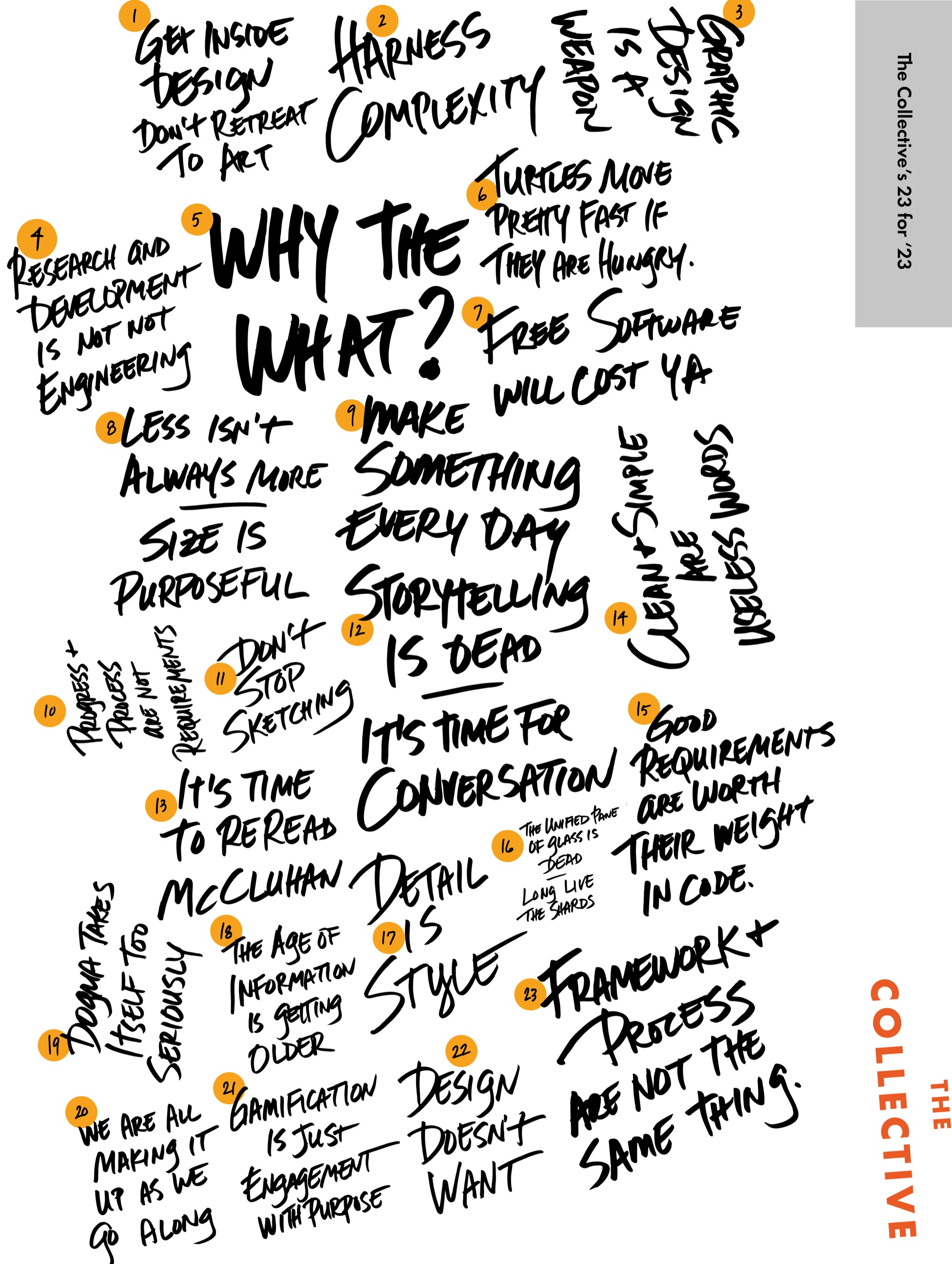
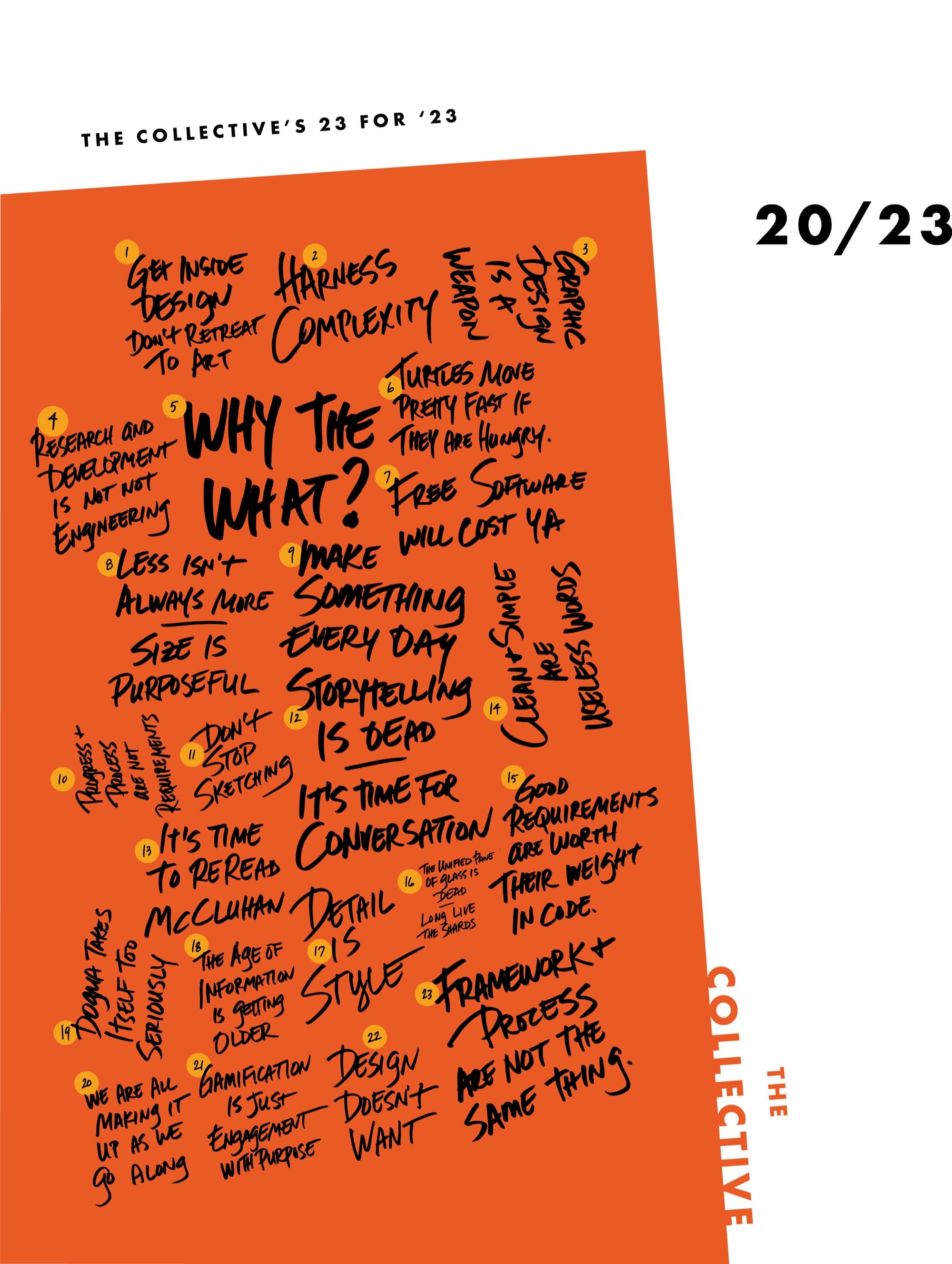
We hand-lettered the entire poster ourselves: no display fonts, no vectorized handwriting, just real ink on real paper, scanned and cleaned.
We numbered every statement so the page reads as a list and a poster at the same time. Mustard circles hold the numerals, ink holds the letters, and the grid keeps the whole thing in place.
We translated the same set into a typeset version for the small-format applications: business cards, email footers, deck cover lines, the website.
We stamped twenty-three pinback buttons in the brand's three colors and tossed them into conference bags. I watched a stranger pin "Detail Is Style" to a lapel and wear it like they'd written it themselves.
The Yes Manifesto
We say yes to audacious ideas.
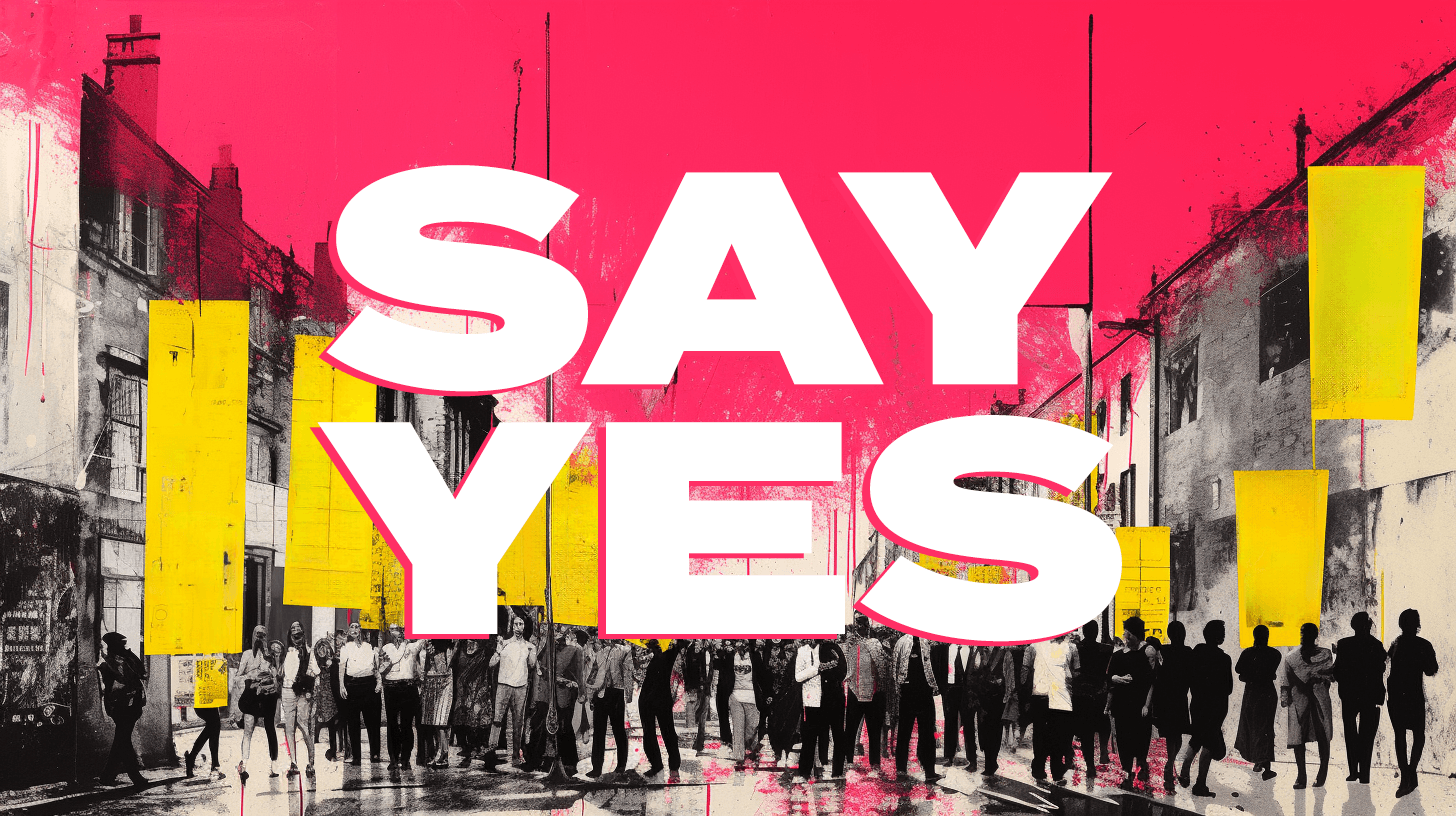
The Yes Manifesto is the public-facing version. It runs with a poster of city storefronts behind a giant SAY YES, and a printed card we leave on the table at first meetings. It's the same brand, just with a louder voice. The hot pink shows up exactly when we want the room to relax and start naming the audacious thing first.
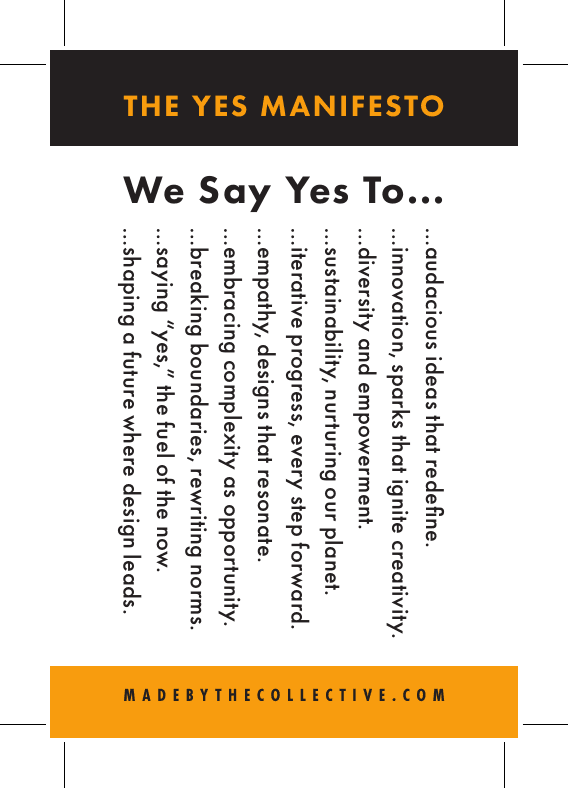
We say yes to
- audacious ideas, sparks that ignite creativity.
- innovation, diversity and empowerment.
- sustainability, nurturing our planet.
- iterative progress, every step forward.
- empathy, designs that resonate.
- embracing complexity as opportunity.
- breaking boundaries, rewriting norms.
- saying "yes," the fuel of the now.
- shaping a future where design leads.
Applied
Let’s Make Awesome.
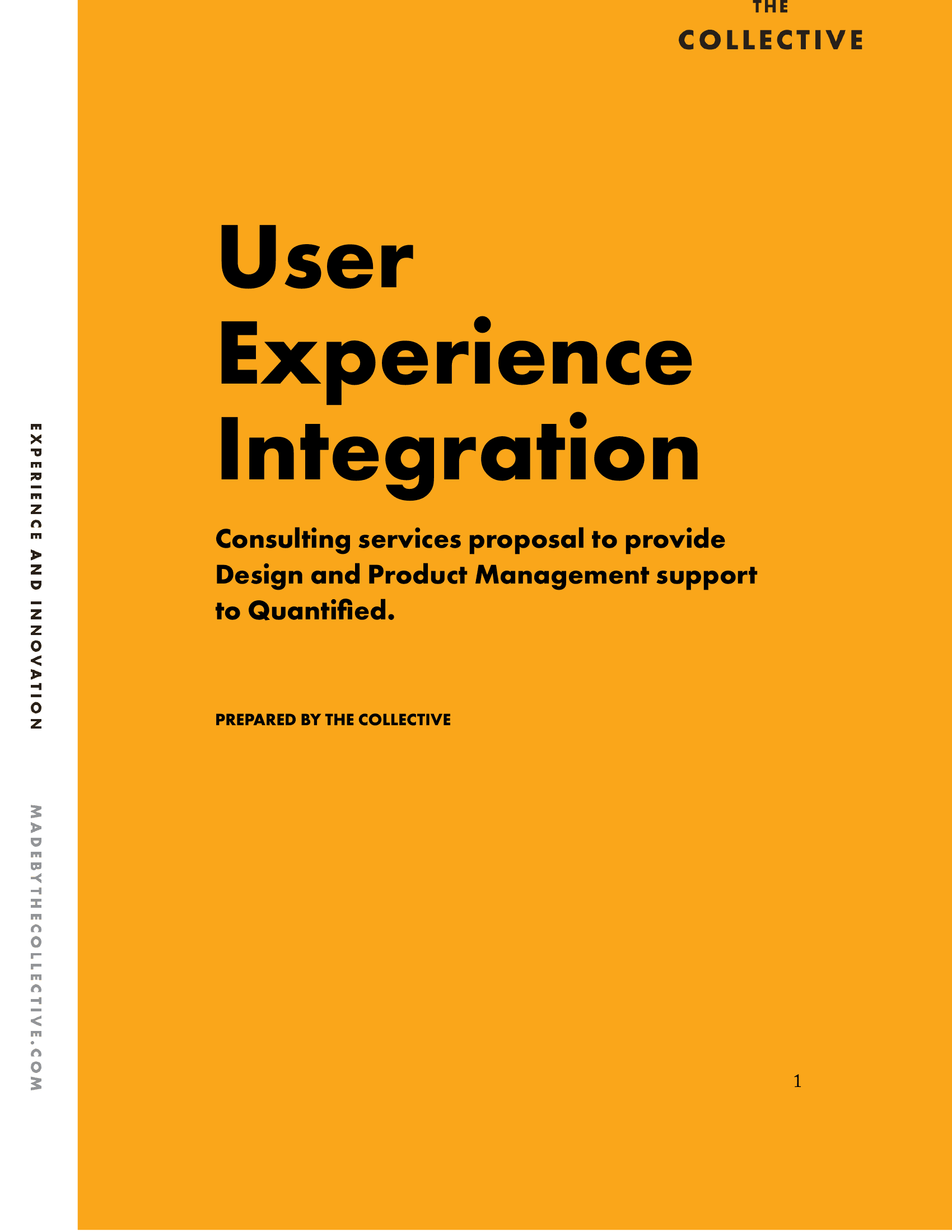
The brand assembles into one of three modes: mustard carries the invitation, black carries the body, and cream carries the writing. A hand-drawn dotted leaf-and-seed pattern shows up where we want texture without losing the grid. The wordmark shows up at every scale, including the smallest one.
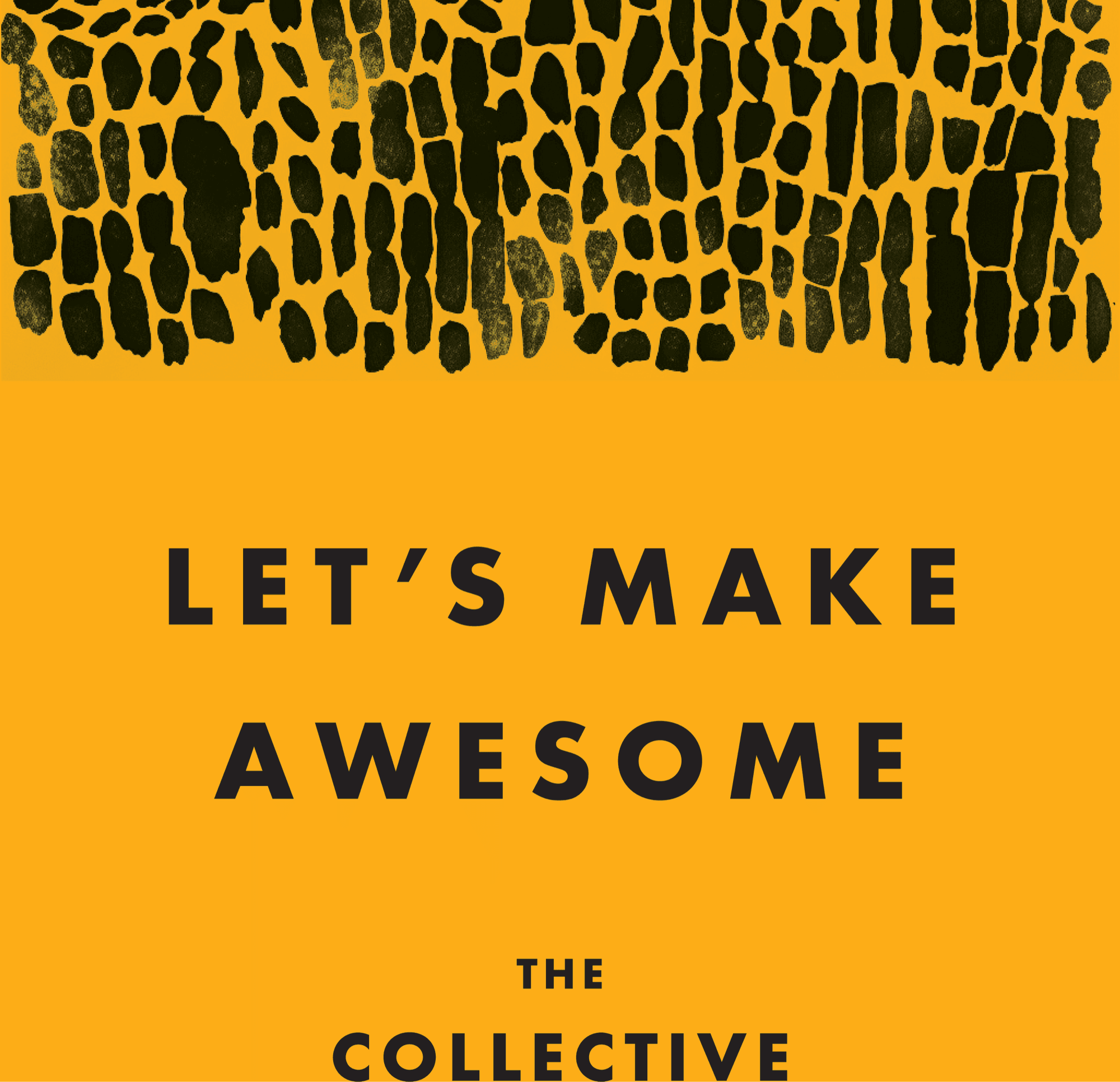
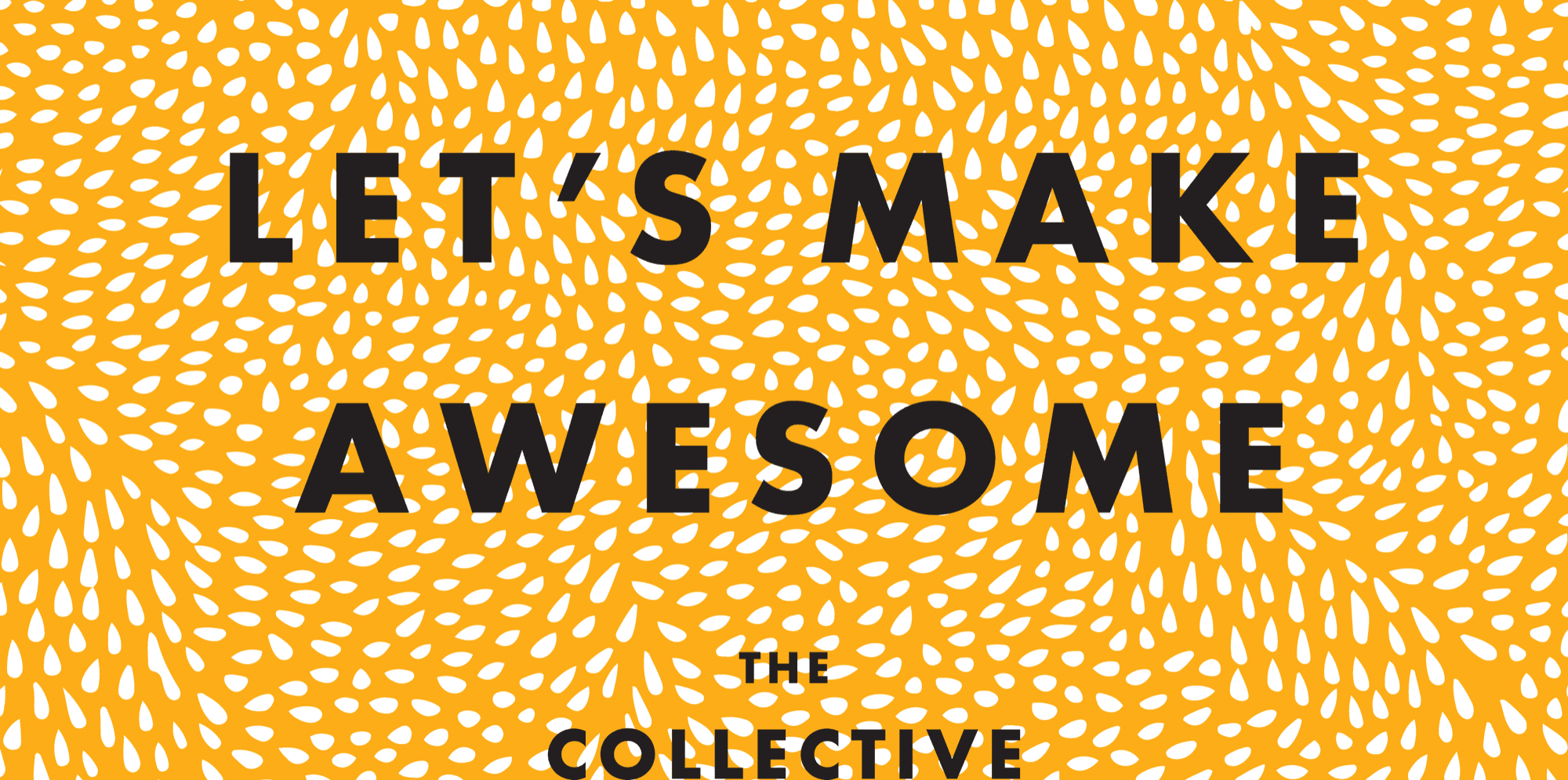
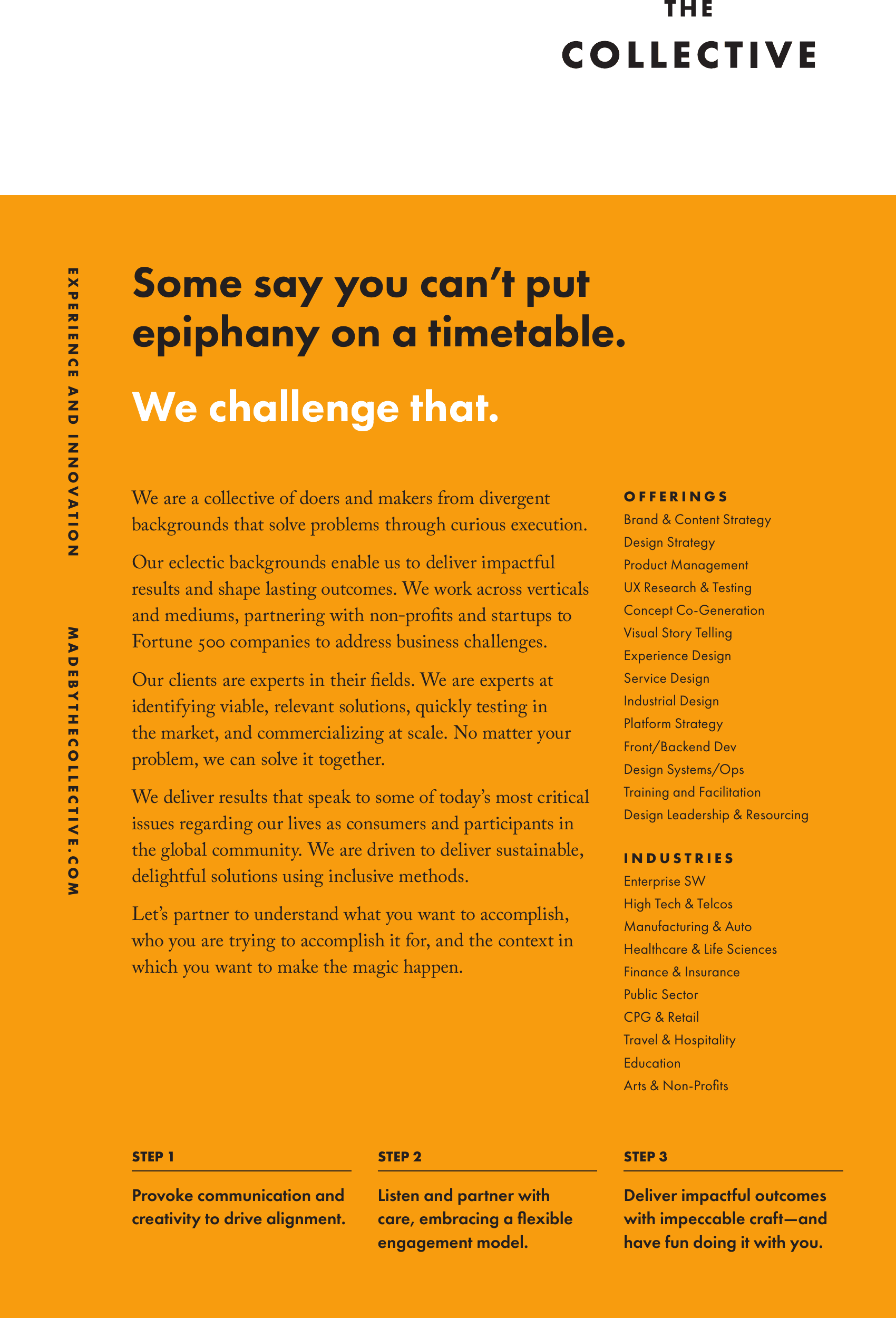
Pinback buttons, stickers, manifesto cards, and conference giveaways all share twenty-three colorways and one pattern.
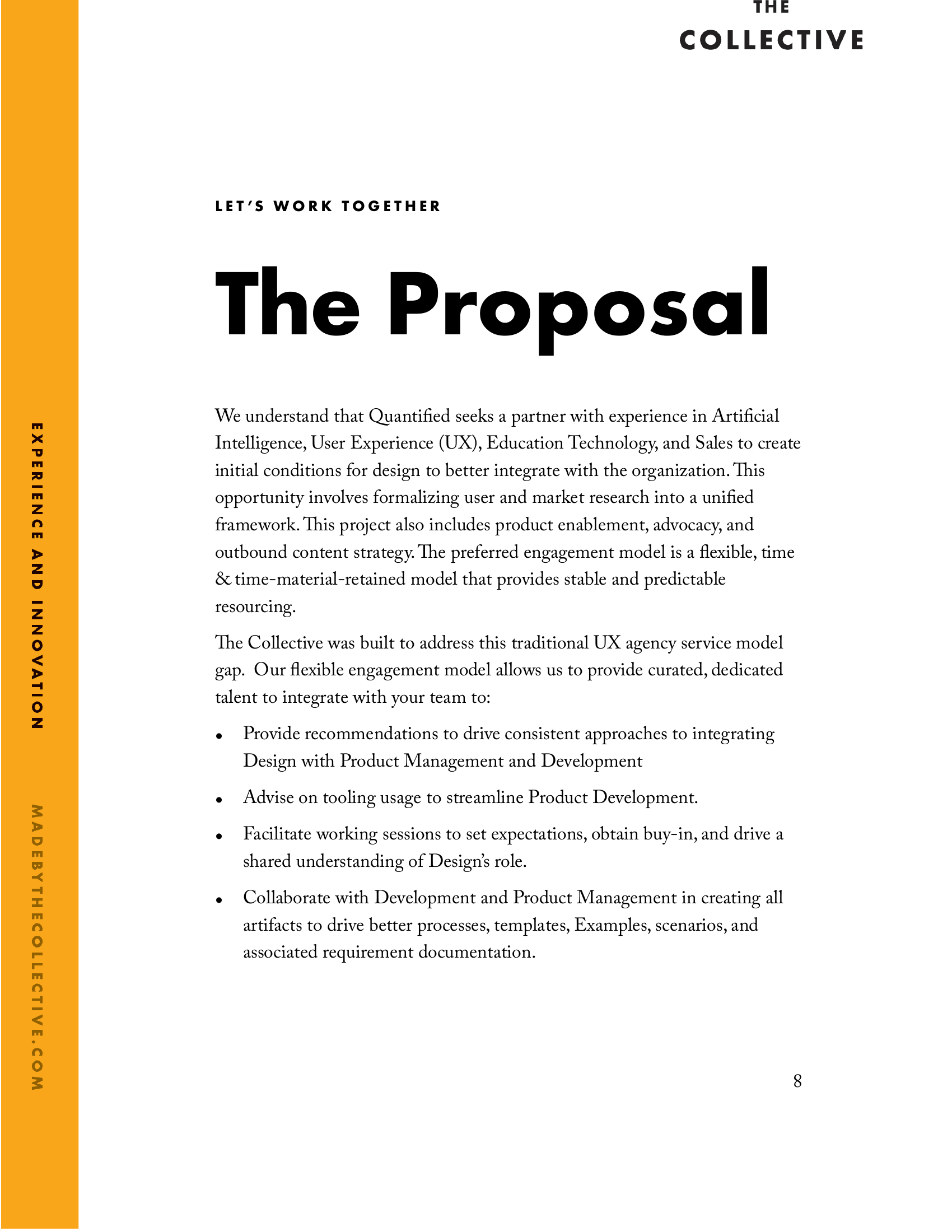
Proposal covers and capability decks share a mustard ground, a big black headline, and a minimal sub-line. The brand carries the formality so the writing can stay loose.
Letterhead and "Send After" follow-up cards keep the conversation warm without diluting the wordmark. The leaf pattern earns its keep on the print pieces; it's the thing people remember about a postcard pulled out of an envelope a month later.
The launch system shipped as a single brand book the team still uses every time a new piece needs to ship. You drop a headline in, drop the pattern down the side, and it's done.
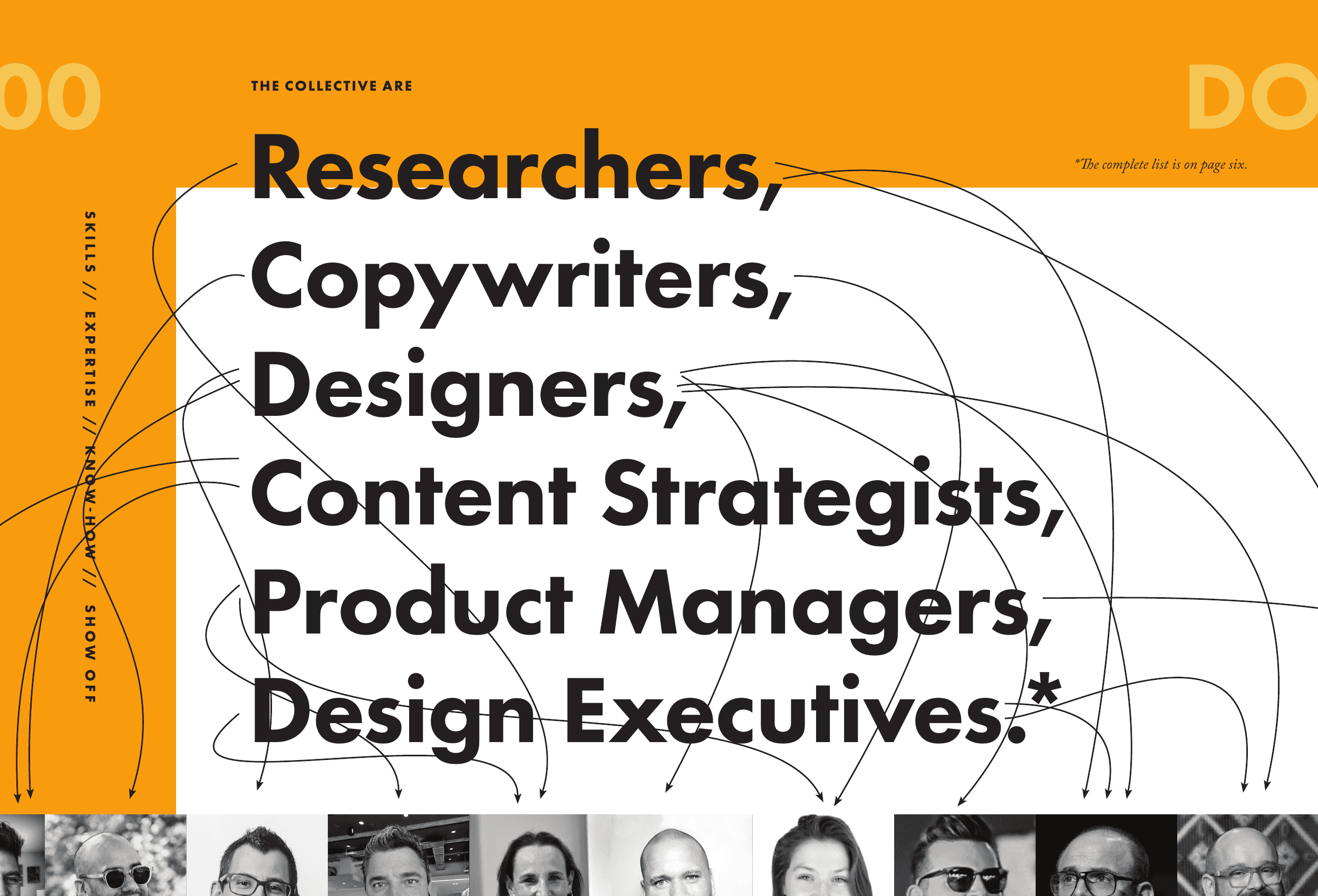
The Collective are
Researchers, Copywriters, Designers.
This is the clearest single page in the launch deck. The page sets six job titles big and tight, frames the count with a mustard panel, and pulls hairline curves down to a portrait of each person behind it. The page is the introduction. You meet the work first, then the faces. Names follow.
Decks by industry
One brand, six portfolios.
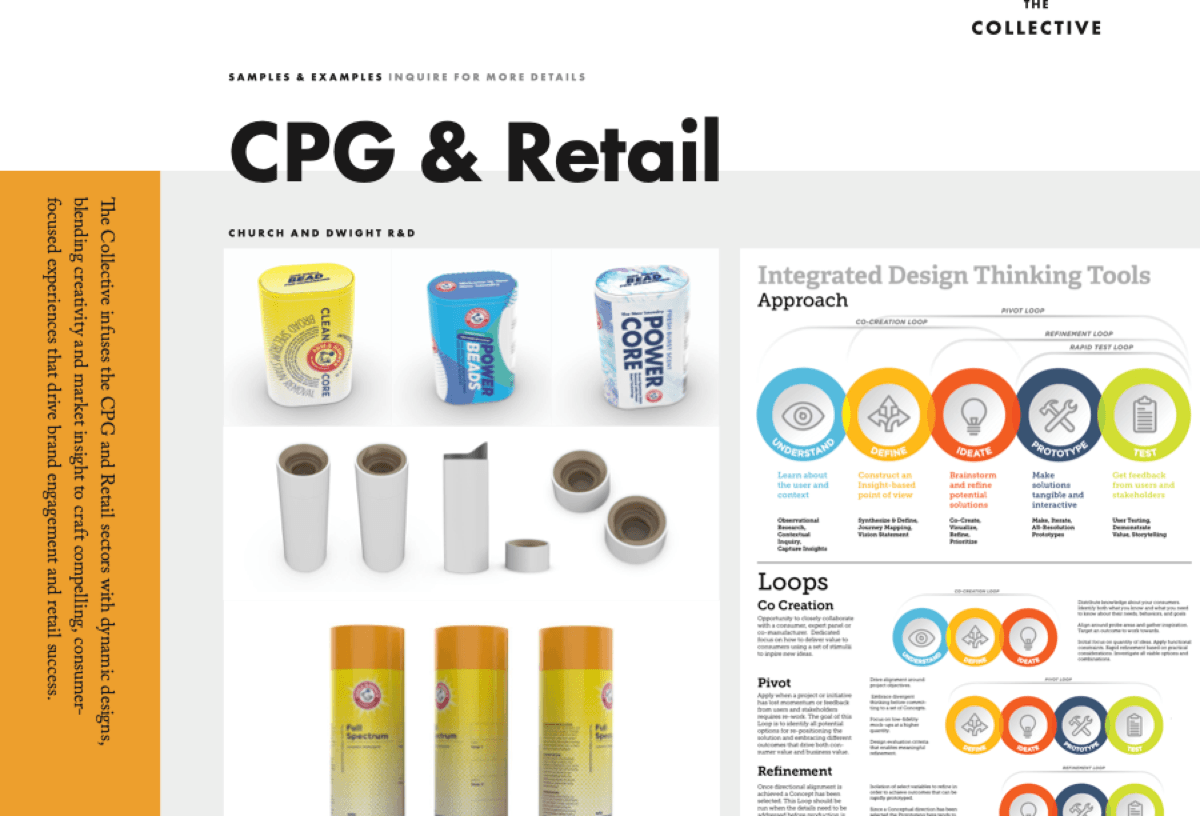
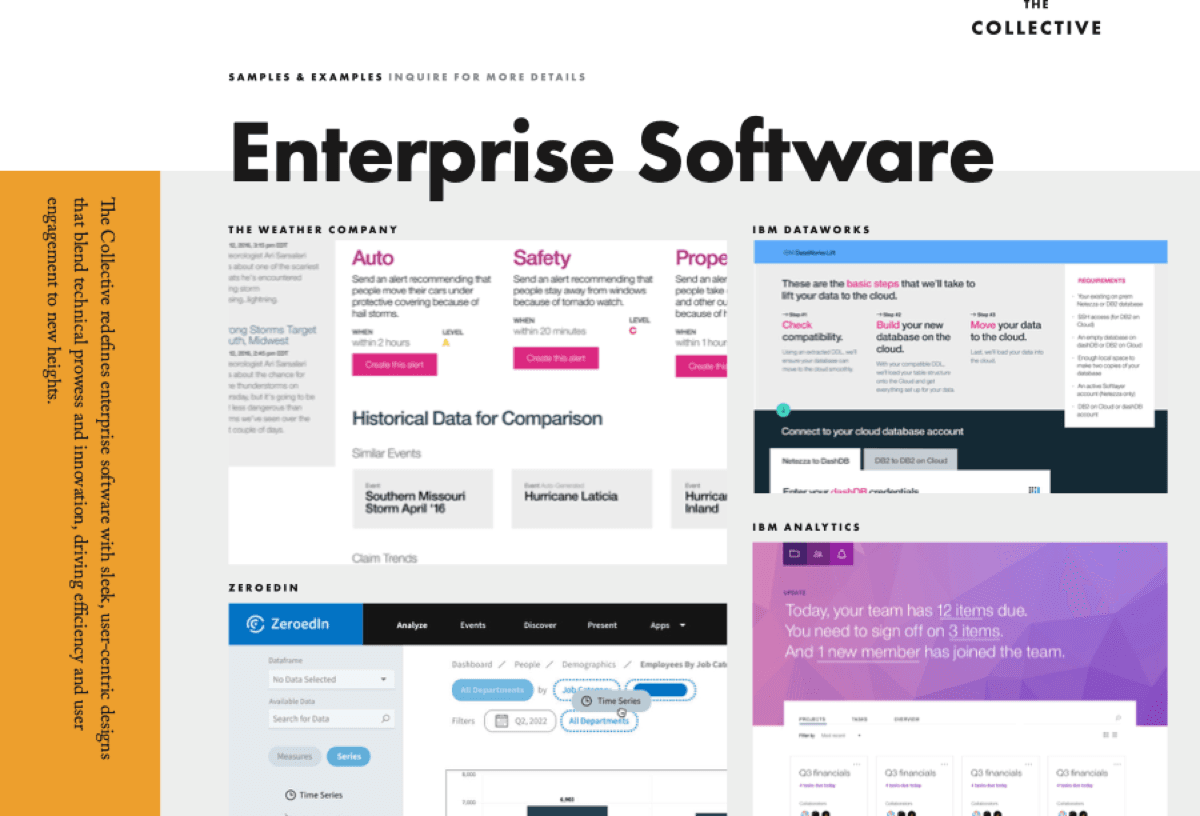
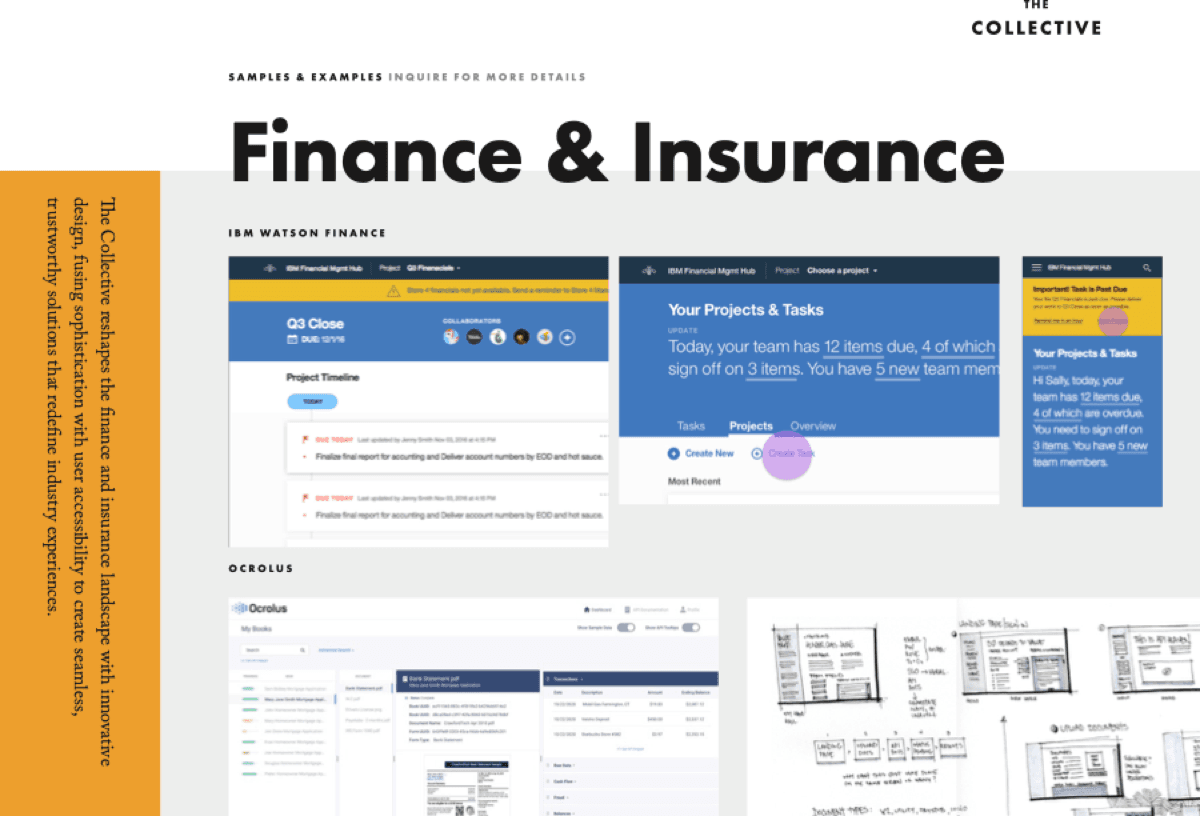
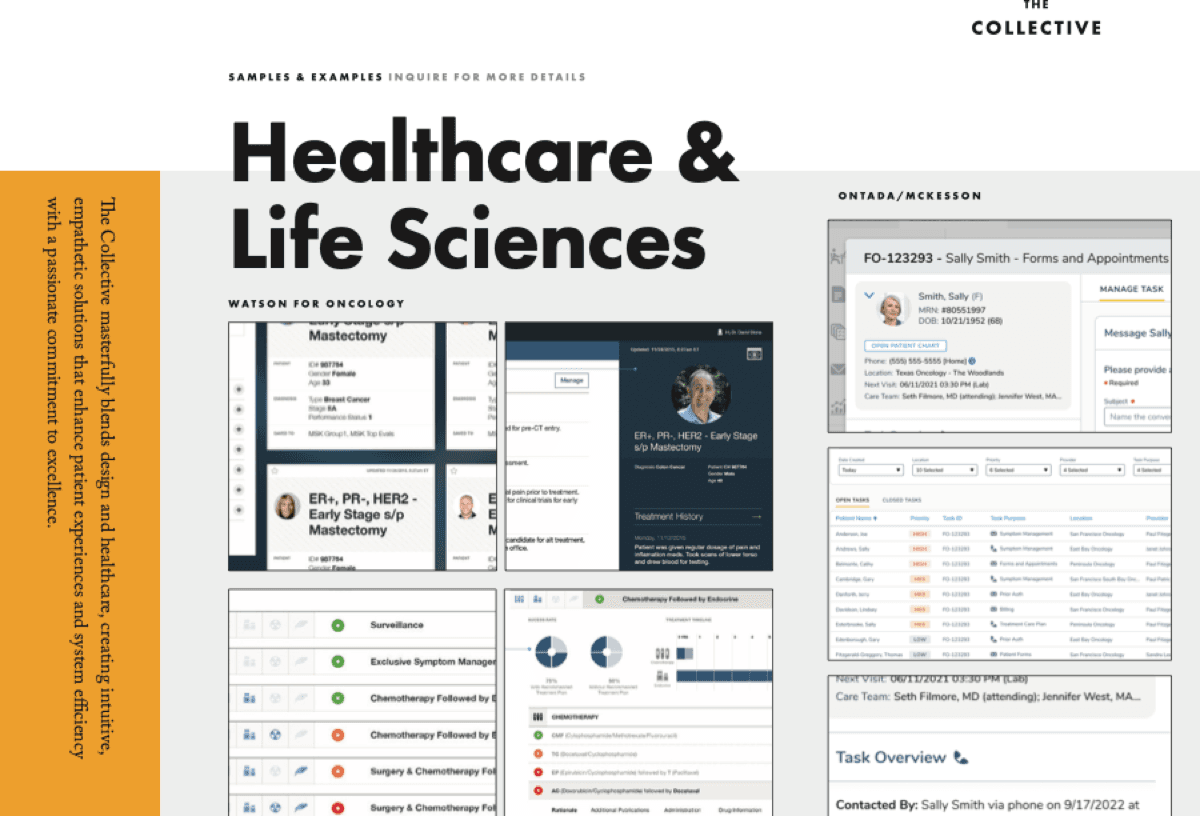
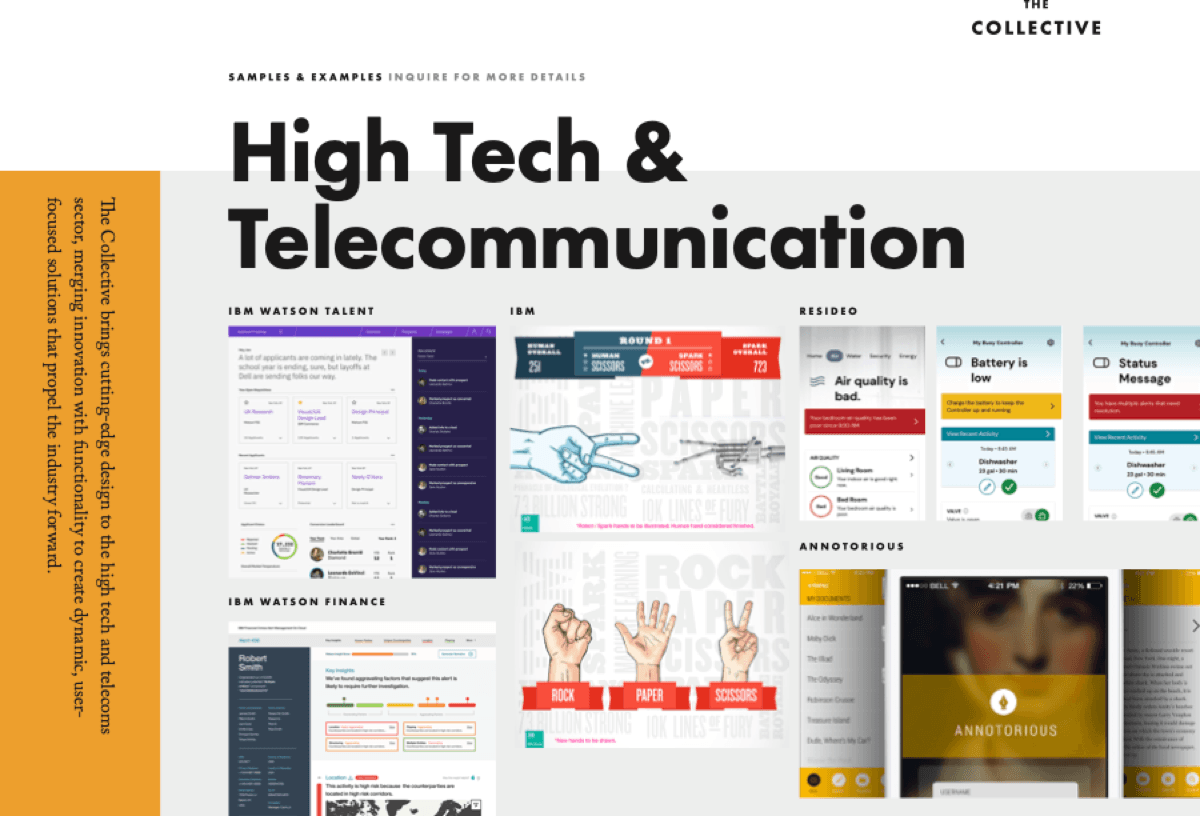
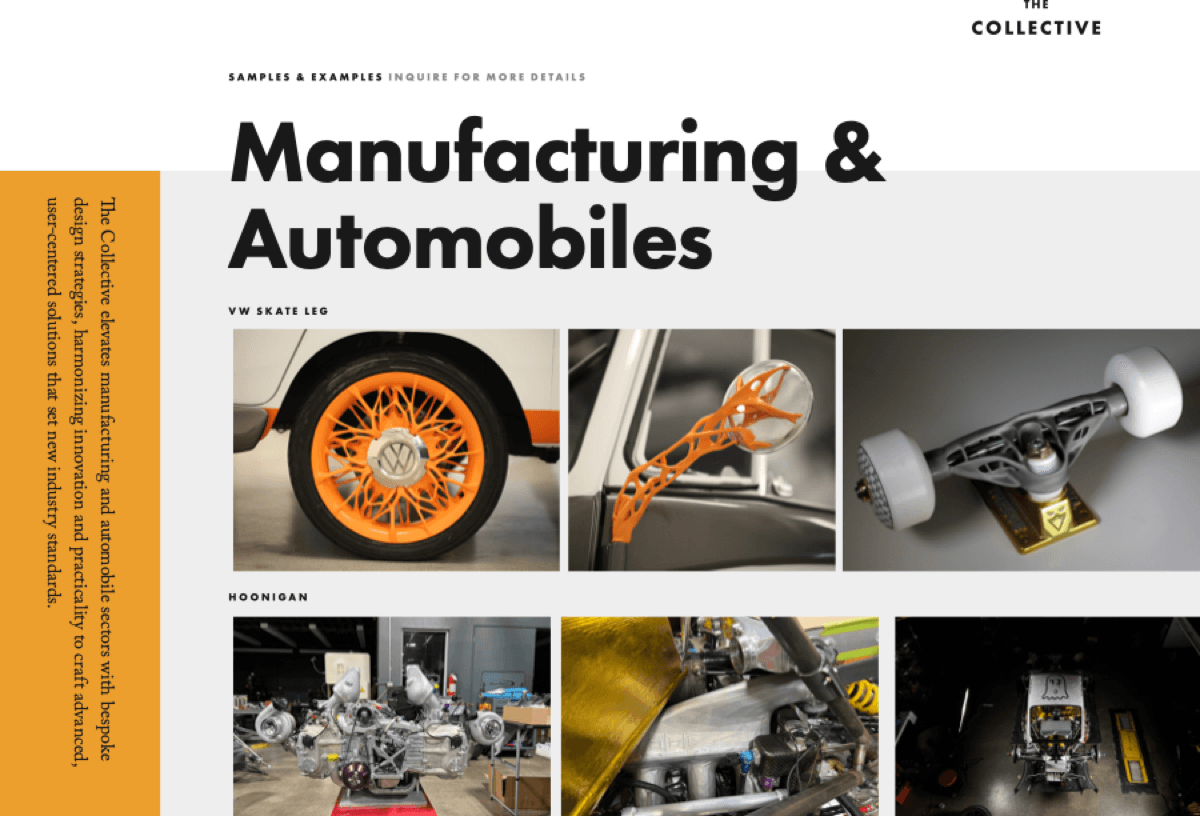
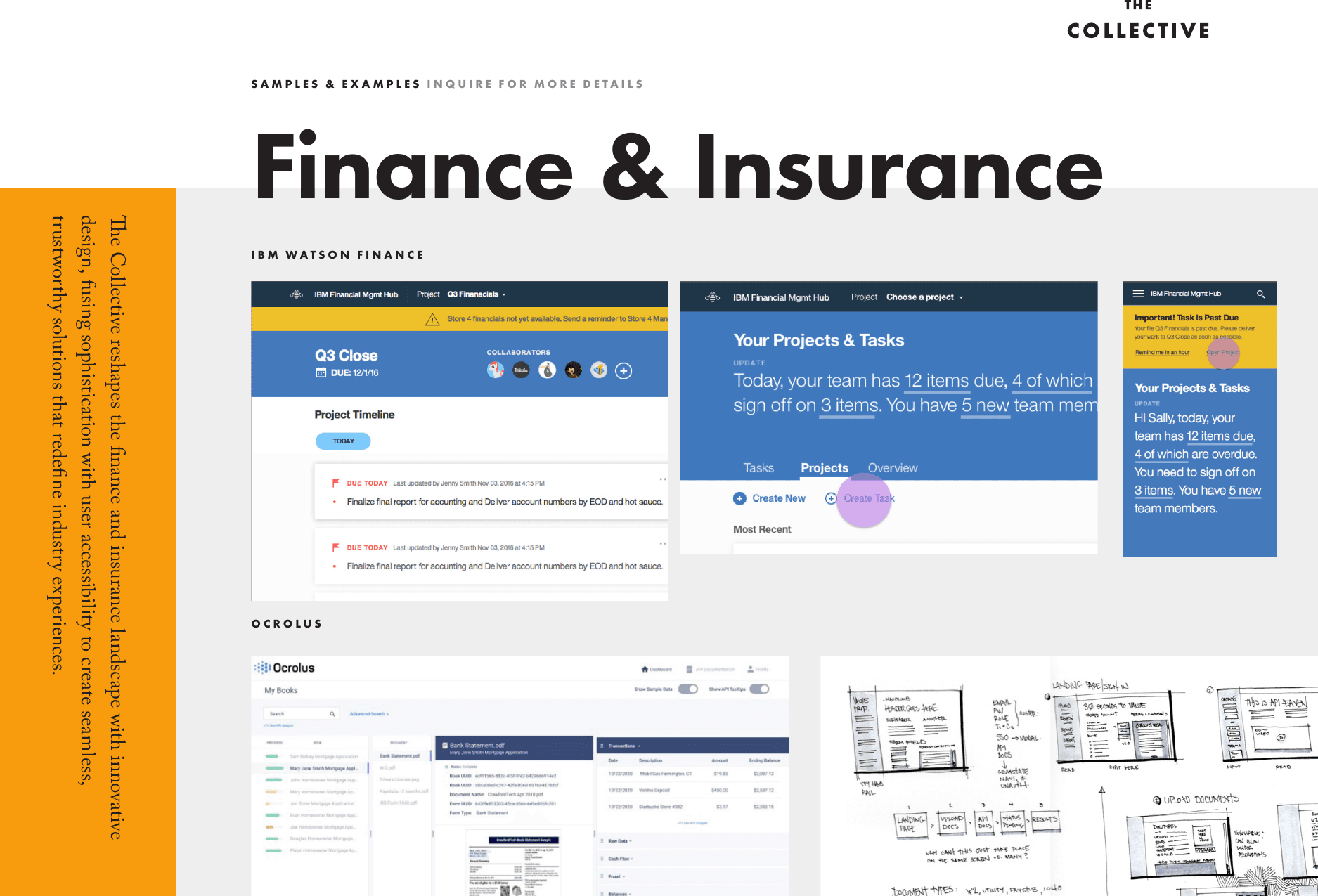
The studio works across CPG, enterprise software, finance, healthcare, high-tech, and manufacturing. Each industry has its own portfolio deck: same template, same brand, the right work surfaced for the right room. The deck system is what makes a small studio look prepared without looking the same twice.
"I've worked with John and the Collective for two decades. From the Texas Arts Project to Summer Stock Austin to Impact Arts, we've created educational brands that have transformed the lives of young performers across Central Texas. Constantly surprised by their out-of-the-box points-of-view and insight-driven approaches. And everything looks amazing."
Ginger Morris, Founder · Impact Arts
The hardest brand to design is your own. The launch system is the one that survived the four drafts before it. The pieces that didn't make it taught us what mattered, and we let them go a little reluctantly. The ones that did still hold up. Every time a new client opens a deck and a small "THE" sits above a bigger "COLLECTIVE," the studio shows up before any of us do.
Takeaways
- Made By the Collective
- Brand Identity
- Design Studio
- Founder
- Creative Direction
- Design
- Brand Strategy
- Visual Identity
- Voice
- Editorial Design
- Wes Wright (Partner)
Up next