Zoofari
A workshop, a team, and the process book that empowered them
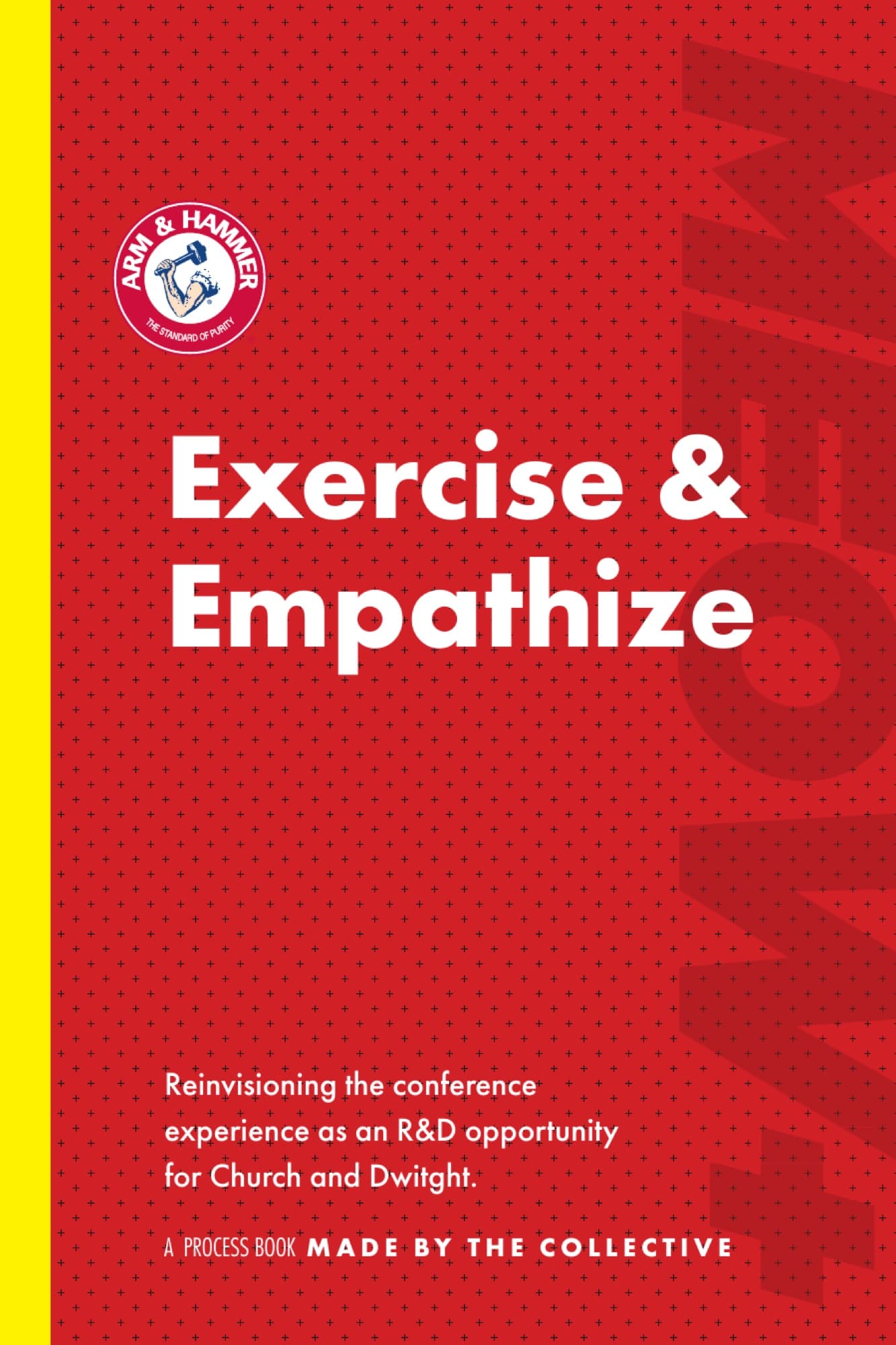
Arm & Hammer's pet-care team needed an R&D push using SuperZoo as a research lab. The Collective got the brief. I designed the workshop: schedule, exercises, prompts, rubric, rooms, supplies, and the way Day 1 fed into Day 2.
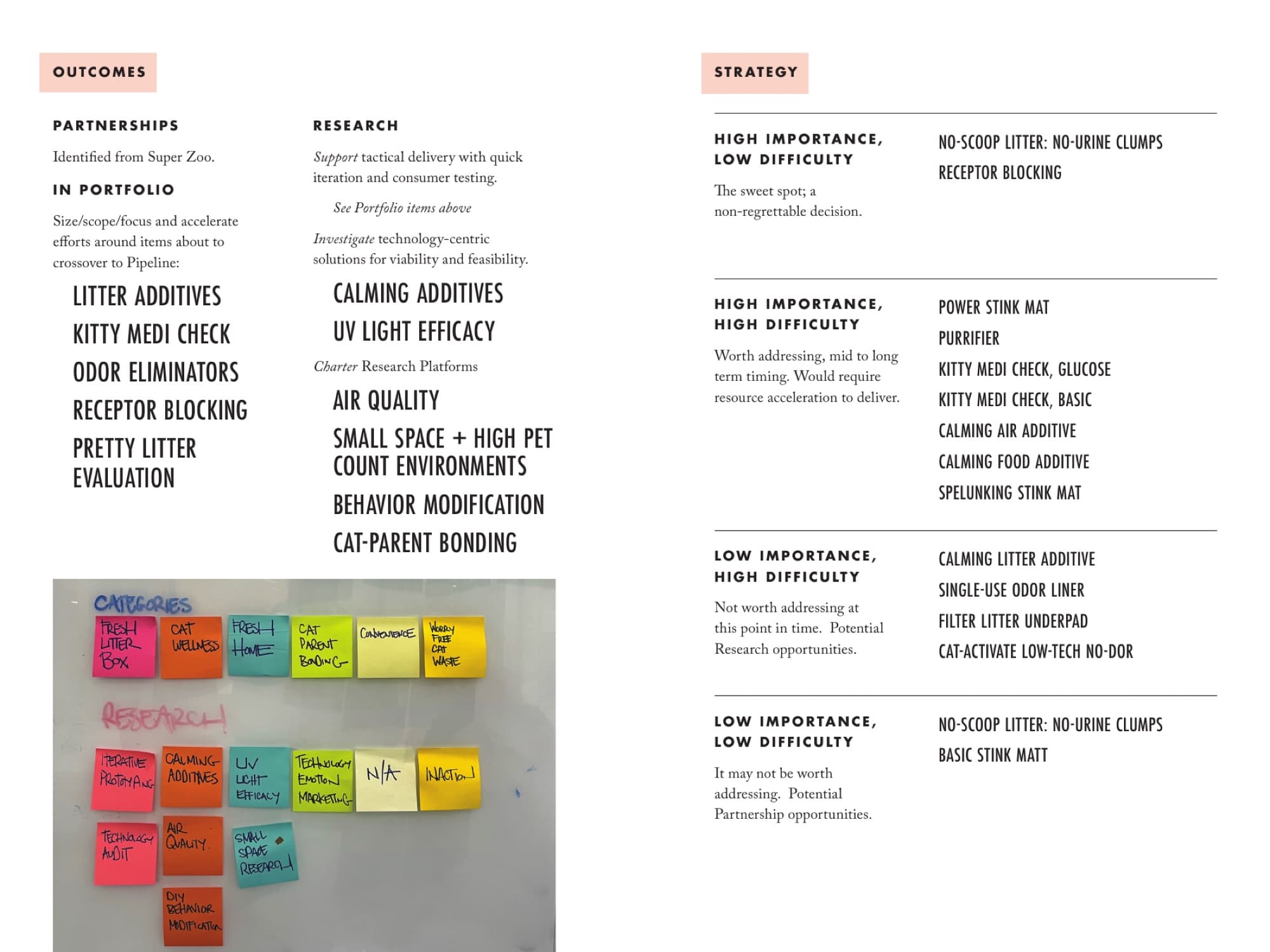
Then I handed it to a facilitator and team to run. The team led the floor walk at SuperZoo, ran the Princeton ideation, prioritized outcomes, brought back concepts ready for roadmap.
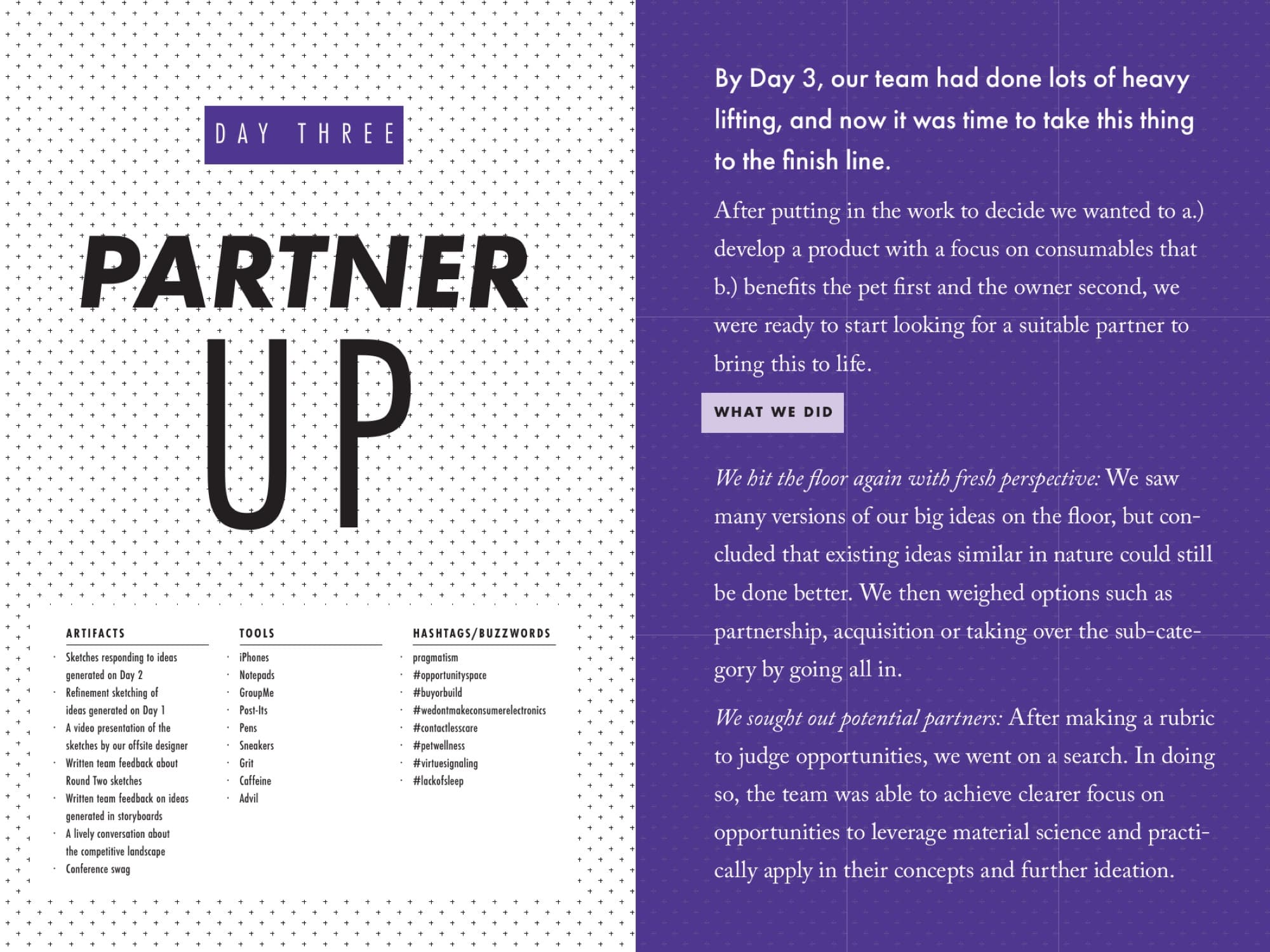
I designed the process book that walked leadership through what the team made: the cover, the structure, the rhythm between schedule and finished concepts, the photographic record, the product sketches. The document made the work look as good as it was.
The workshop
Designed once, run by someone else.
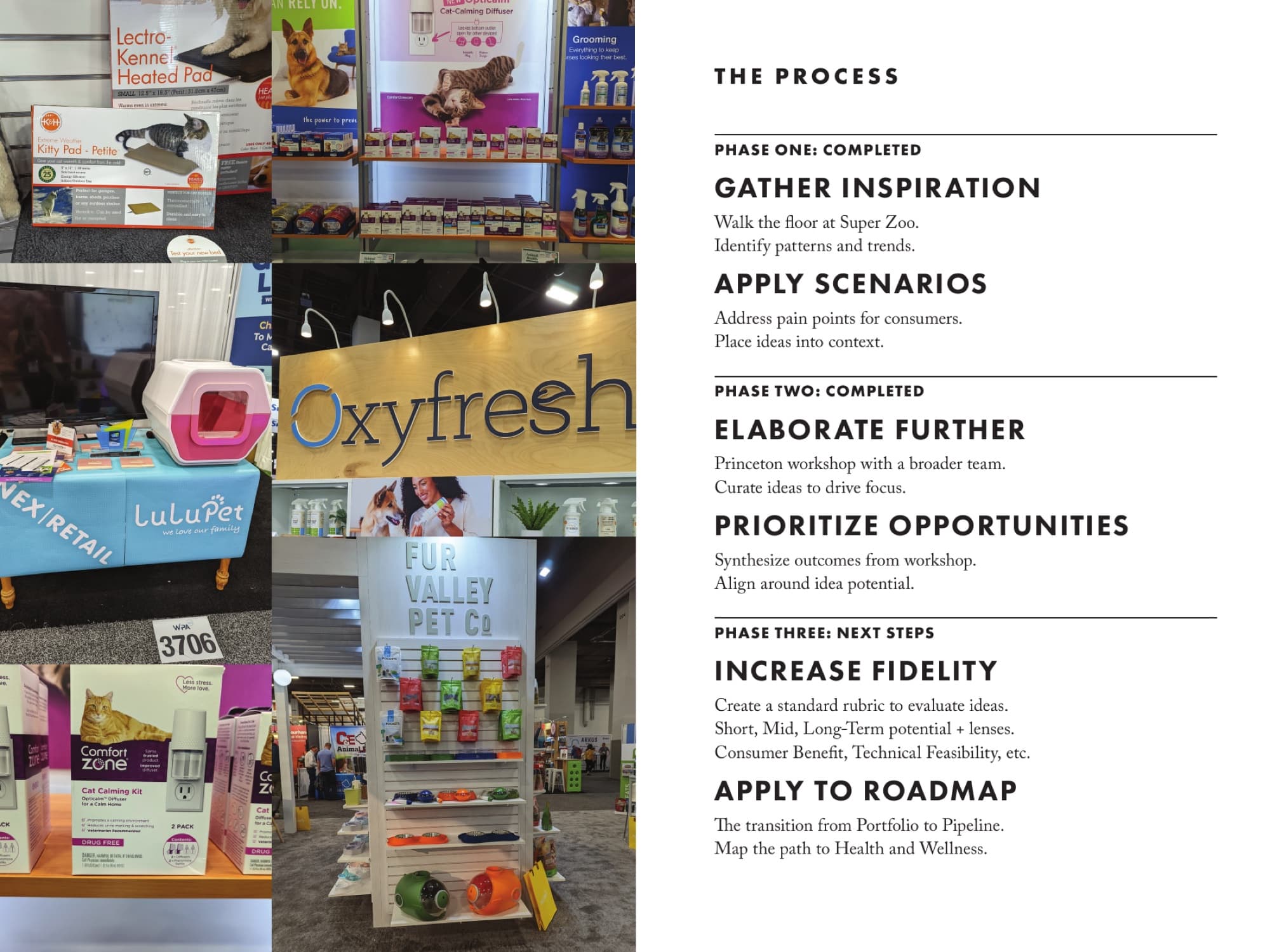
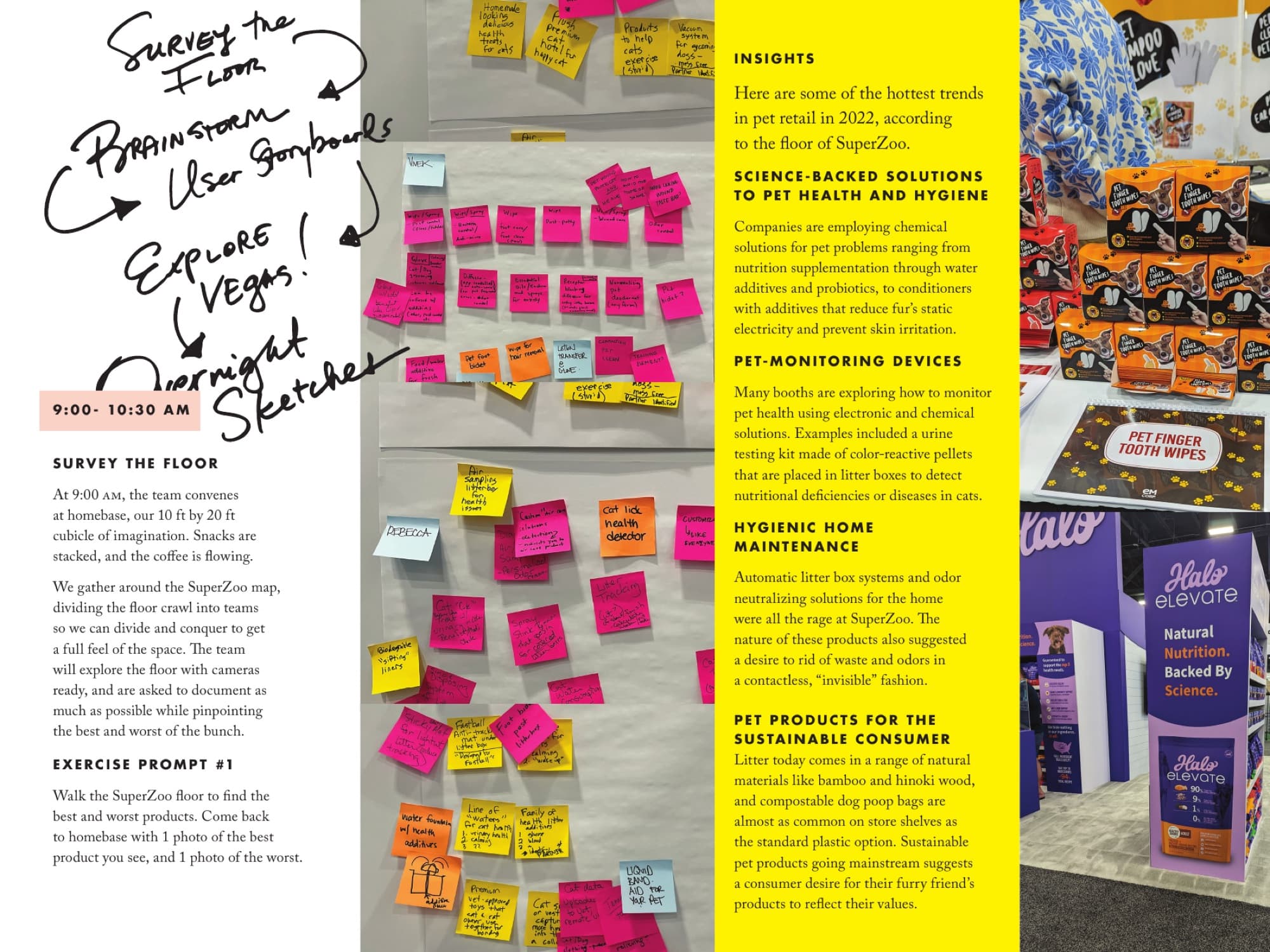
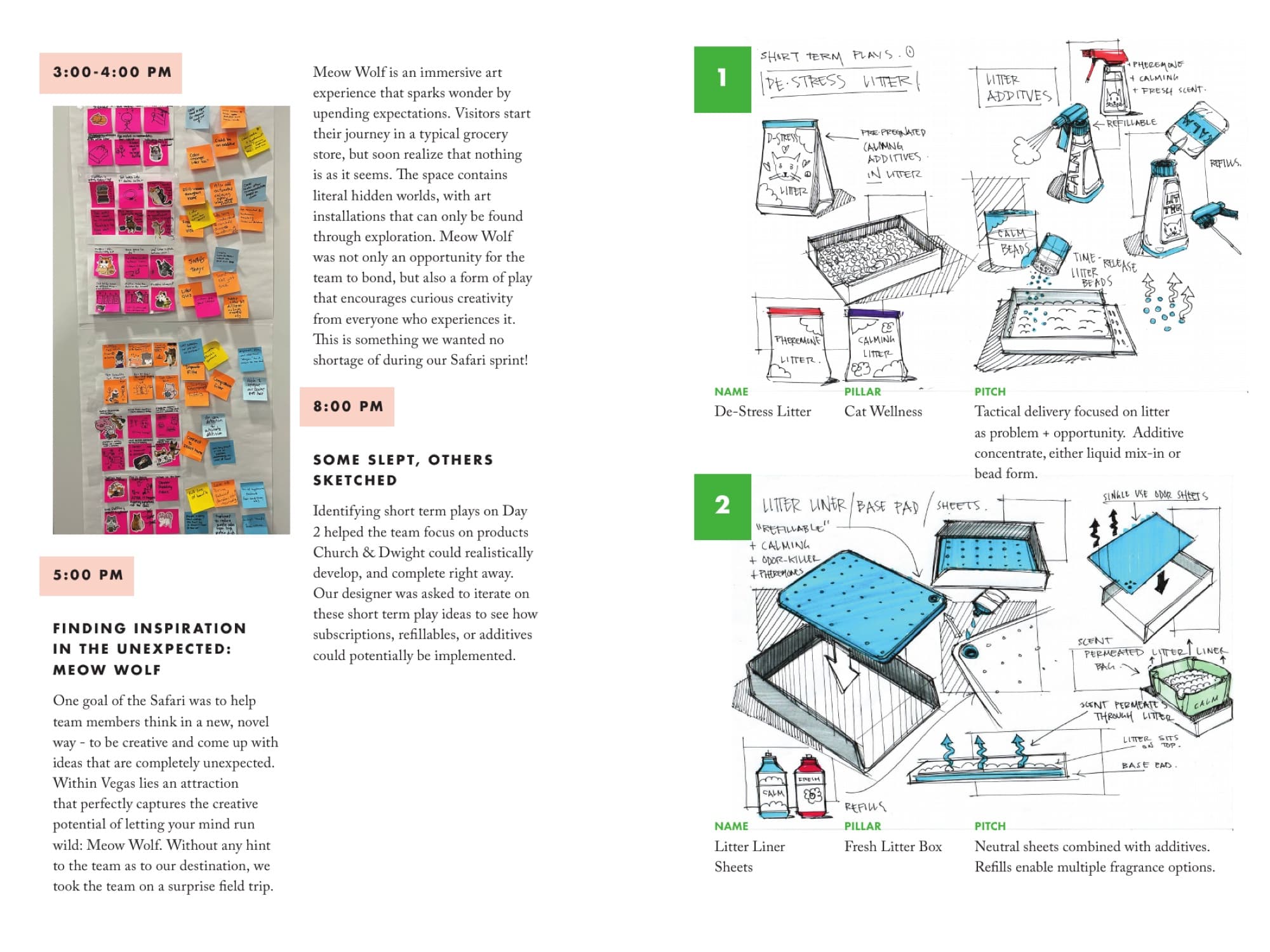
The workshop ran across two phases. Phase One was a field study at SuperZoo in Las Vegas: walking the floor, identifying patterns and trends, talking to consumers and category buyers, capturing pain points the team would later turn into prompts. Phase Two was a Princeton-based ideation session that took the field findings and pushed them into product-form sketches.
The output
Twelve concepts, ready for roadmap.
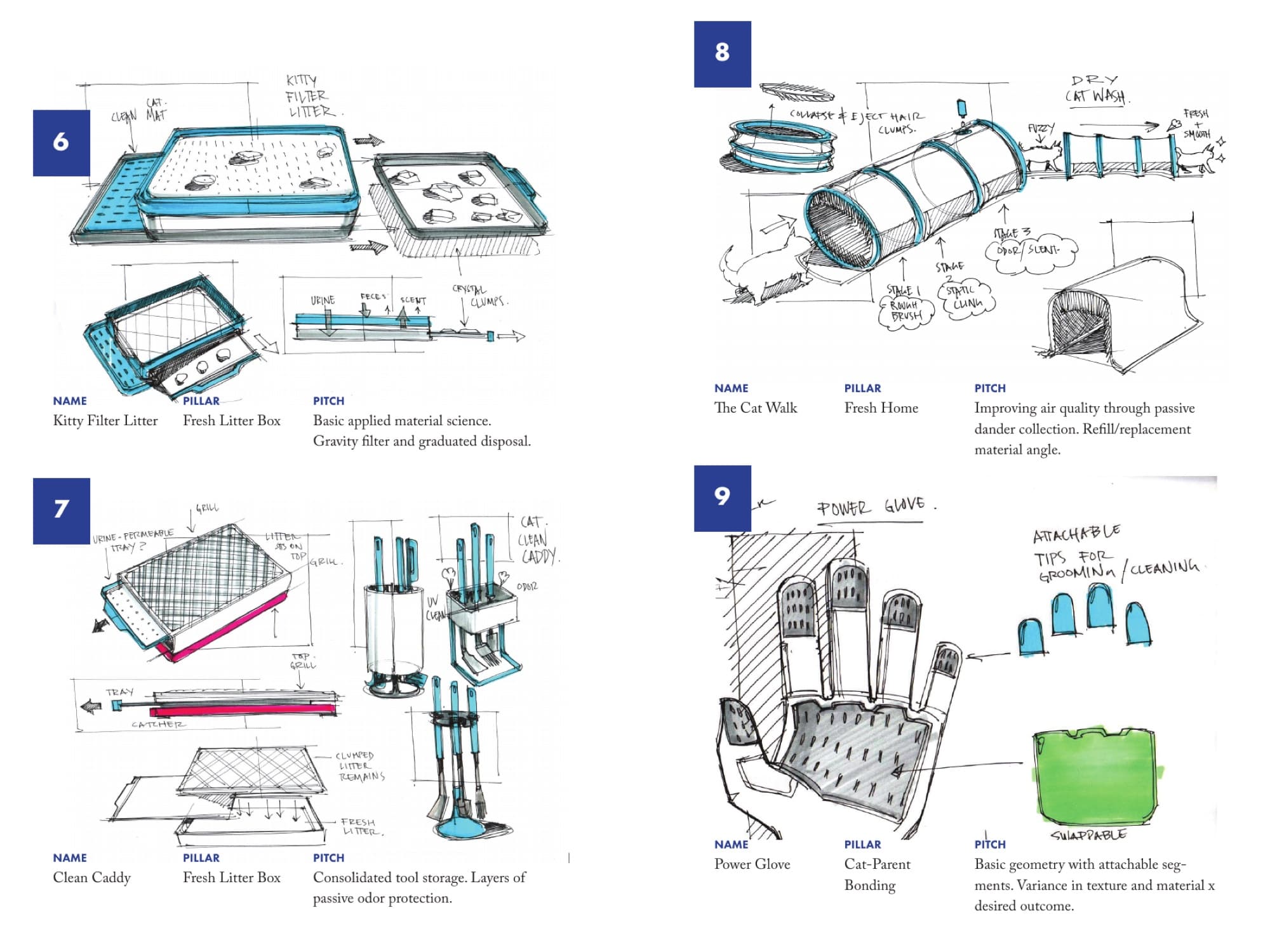
Each concept that came out of the workshop got the same treatment in the book (Name, Pillar, Pitch) and a hand sketch by one of the workshop participants. The same template ran across every concept so leadership could compare them at a glance.
The book in the wild
The artifact ends in a stack on the desk.
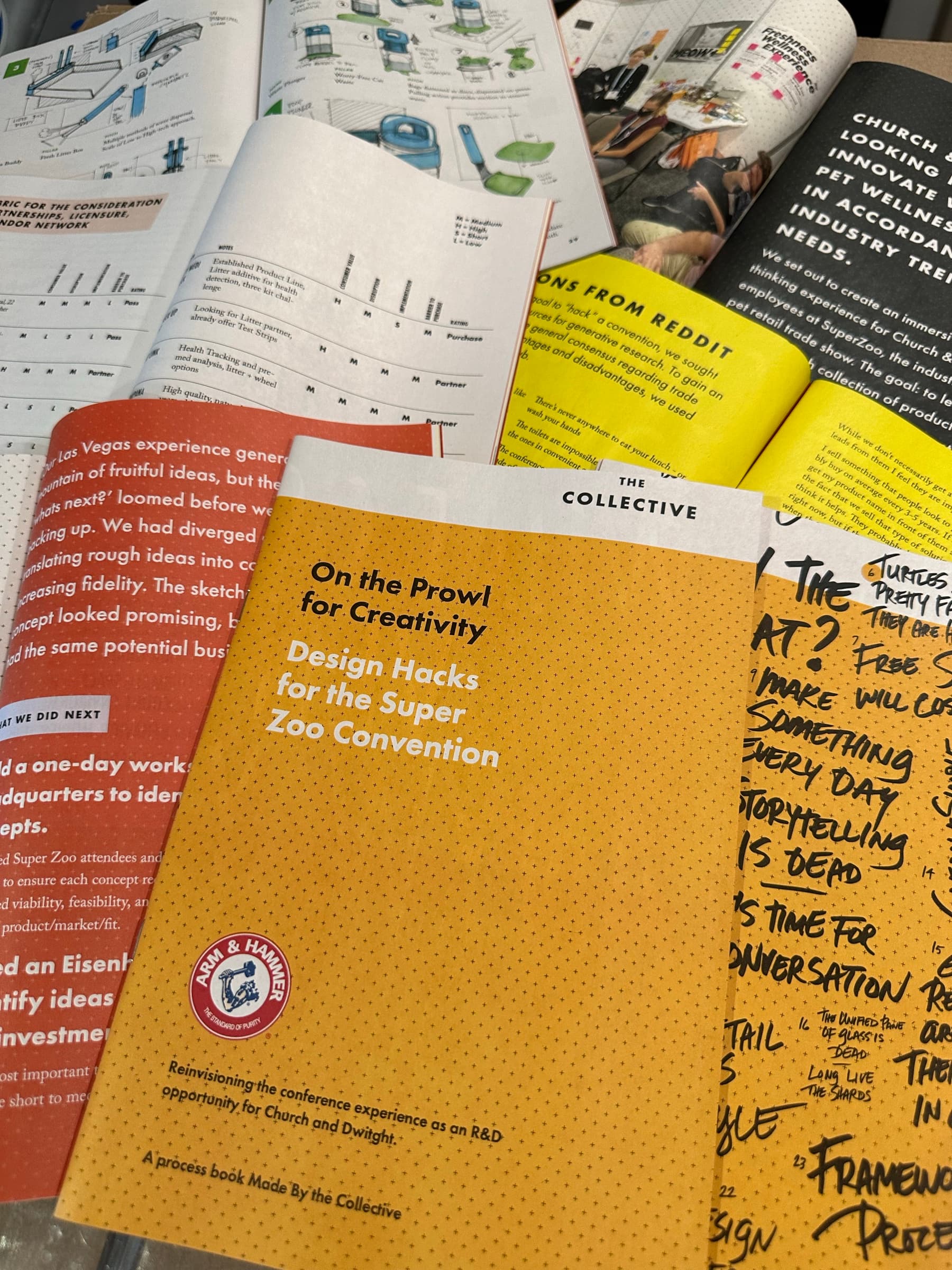
The book lands on someone's desk in New Jersey alongside the workshop residue: the yellow legal pad full of in-the-room scribbles, the printed Reddit-quote research, the marker-on-grid graphs, the "How might we" strip down the side of a worksheet. The book is the version of all of that you can hand to a VP: the same chaos, in a clean shirt. Both belong on the same desk.
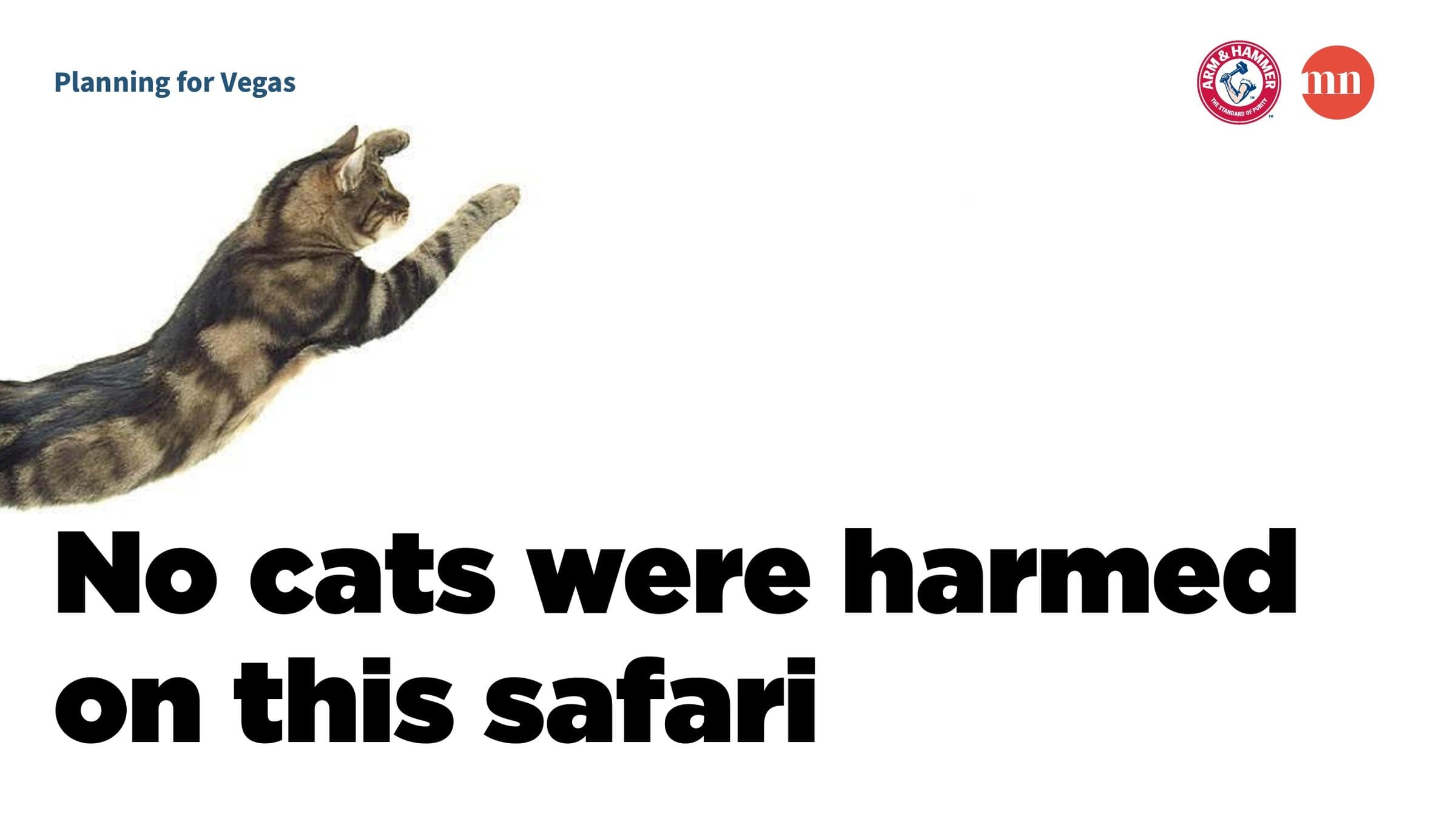
The internal planning deck that set up the workshop opened with a leaping cat and the line "No cats were harmed on this safari." The whole project ran on that energy. The trip was the safari. The cats are the consumers. The hunt is for product ideas the company can actually take to market.
The point is the room running without you.
Designing the workshop, handing it off, and then designing the artifact that ends it is a complete loop. The team owns the work. Leadership gets a clear read of what was done. The next R&D pass starts with a deliverable instead of a memory.
Helping a team do their best work comes down to two things: the structure to do it, and something at the end that shows they did. I got to build both, and that's the part of this work I love most.
Takeaways
- Church & Dwight (Arm & Hammer)
- CPG
- Pet Care
- R&D
- Workshop Design
- Facilitation Handoff
- Editorial Design
- Workshop Strategy
- Team Enablement
- Book Design
- Made By the Collective
- Arm & Hammer Pet Care
- Princeton Workshop Team
- SuperZoo Field Team
Up next